The midpoint victory option.
Having trouble with your midpoint? By giving your protagonist everything they think they want
The Story and Plot Weekly Email is published every Tuesday morning. Don't miss another one.
A big bottleneck for many as they begin to structure their story is the midpoint.
Everyone is going through this process now in the Idea To Outline LIVE course inside the Story and Plot Pro community.
The midpoint is obviously a crucial decision.
I credit realizing the importance of the midpoint as one of my first big breakthroughs toward being a professional. My work improved dramatically after that, so I give it pretty good weight in my courses.
But its importance does not mean it's prescriptive.
Our natural tendency is to make the midpoint a defeat for the protagonist.
This is certainly mine.
And why wouldn't we? “Torture your protagonist” and “What's the worst thing that could happen to your hero?” are both fundamental and extremely helpful when breaking our story.
Vogler even described the midpoint as "the innermost cave."
And a terrible defeat for the protagonist is a perfectly fine choice!
It's just not the only choice.
So if you're stuck with your midpoint and you're not entirely sure how to make it work the way you want it to…
Consider using the midpoint to give the protagonist everything they think they want.
See how they handle it. Explore how it makes things worse.
If it's not working, adjust.
A main tenet of my teaching is to be decisive. Commit and explore. Go with your choices. Follow through.
But this doesn't mean that if things aren't working, we keep banging our head against the wall either.
I make a decision about the midpoint pretty early.
It is often the third big structural decision I make on a project.
Once I have the dramatic question, the inciting incident, and the Act 1 break are the easiest structure points to tackle.
So those are the first two decisions.
The next decision after those is going to be either the midpoint or the break into Act 3. Like everything, these two go together, so once you choose one, it affects the other.
If you know what the throughline for Act 3 is going to look like, that will affect your midpoint choice.
If you know your midpoint, it's pointing you the way to your Act 3, especially in Sequence 6.
And this is where we normally get stuck.
Because the midpoint interlocks with so many other things, we sometimes mentally cut ourselves off from other options.
If it works, great! Go with it. There is no need to change what is working.
But if it doesn't work, we may feel stuck or locked in. And we let ourselves get discouraged.
Don't. You're in full control. This is your story, and you can tell it any way you want to.
Know what you want out of the midpoint, and it will show you the way.
I have three basic requirements for the midpoint.
- The midpoint shouldn’t focus on a subplot. Your true midpoint is almost always directly related to the dramatic question.
- Let the protagonist feel it. Let it emotionally affect the protagonist and us.
- It is where the character’s coping mechanisms, all their problem-solving skills, all the ways they have handled the world until now, prove to be inadequate for the situation. The character does not need to realize this. They just need to run into that wall.
What do we hope to gain from the midpoint?
This is important too because once we make this decision, we want to make sure it's giving us these two things:
First, it’s the launch pad for second-half momentum.
That’s huge in itself. Think of it as a trampoline bounce to renew energy and audience engagement.
Where do you want the second half to go?
If we fulfill the requirement that it's a victory or a defeat, the protagonist is going to emotionally respond to it. It is going to give them a new, more immediate want.
And that throughline will push us forward.
The midpoint also gives you a clear direction for Sequence 6 before Act 3.
We are always fighting the battle with infinite choices that freeze us up, so anything that defies natural law by reducing infinity by half is some very cool witchcraft.
If the midpoint is a defeat for the protagonist, the protagonist will tend to be brushing themselves off, gaining strength, and taking the initiative in Sequence 6.
If the midpoint is a victory for the protagonist, the antagonist will tend to be gaining strength and taking the initiative in Sequence 6.
Does a victory work for what you want to do?
It’s wonderful when a great midpoint presents itself without too much trouble, so don’t look a gift horse in the mouth if that happens. If it works, commit to it.
But if you do struggle with the midpoint, and you’re not sure which direction to go, here is one strategy among many to explore:
Give the hero what they want.
Just give it to them. They have a want coming out of Act 1. We will often call this "What do they think they want?"
Just go ahead and give it to them!
Let them face their adversary and let them get wrecked. Maybe they even beat them!
If they want success, give them all the success they can handle, but it makes everything worse. If they want to solve a case, let them solve it.
And then explore what happens next.
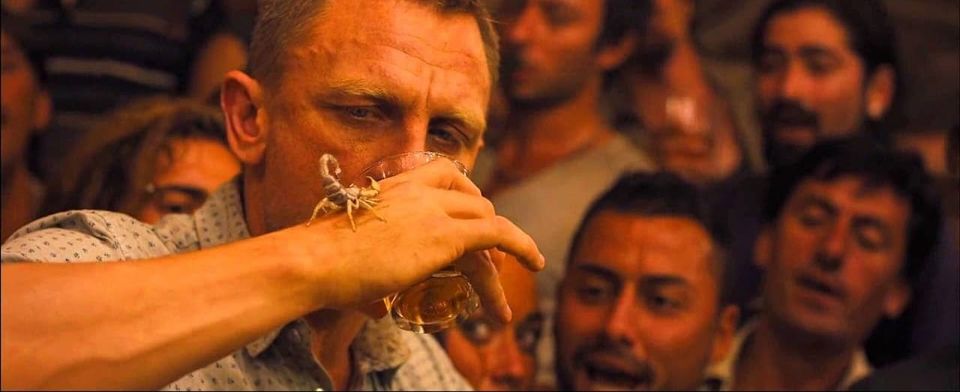
In SKYFALL, Bond captures the villain Silva, only to learn later that it was Silva’s plan all along.
In RATATOUILLE, Remy and Linguini become the toast of the town as hugely successful chefs! This is exactly what they wanted. But it makes everything more difficult, not less.
In TOOTSIE, Michael Dorsey becomes the hugely popular actor he always wanted to be. But it makes it impossible for the relationships that he really wants.
Let the protagonist get a glimpse of what they think they want. Are they ready for it? Do they run from it? Is it just a failure?
Does it make everything worse? Is the thing they thought they wanted not everything they hoped it would be?
In L.A. CONFIDENTIAL, all three protagonists solve the Night Owl Massacre. They are rewarded. They get promotions. They get back on the TV show.
They get what they wanted!
But something has changed within them. They are not who they were at the beginning of the story. What they thought they wanted doesn't sit well with them.
They know the wrong guys were set up, and the real mystery is still out there.
That’s the second half of the movie.
It's important, then, to know where your tension is coming from.
Otherwise, you risk drifting in victory too long, which is not dramatically compelling to watch.
In SKYFALL, for example, the tension after they capture Silva comes from what M isn’t telling Bond, the pursuit of discovering what Silva’s plan was, and a suspicion that his getting caught was part of it.
Another strategy is the second-half inciting incident.
Okay, I'm somewhat making this up as I go along here because I don't know what else to call it. This event reignites the tension soon after the midpoint victory.
In L.A. CONFIDENTIAL, Exley realizes the timeline doesn't fit, Vincennes finds the familiar business card on a dead body, and Bud White admits he knows there’s something more to it, but he can’t figure it out.
In RATATOUILLE, Anton Ego declares he is the only one who decides whether Gusteau’s is back or not.
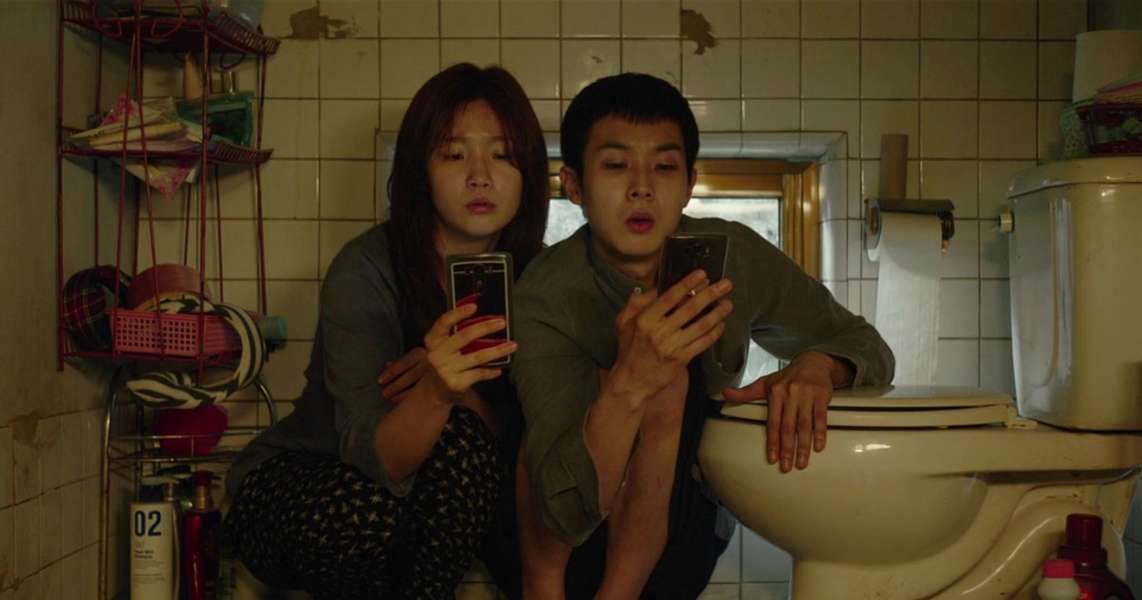
In PARASITE, the Kim family is lounging in the home that they have taken over. They are celebrating, drinking, and getting drunk. They have won.
But then the previous housekeeper shows up, and it's all downhill from there. All the Machiavellian moves that got them to that victory no longer work.
A counterpoint to second-half tension:
One of my favorite films from the '80s is the teen drama MY BODYGUARD.
At the midpoint, the hero and his friend humiliate and defeat the high school bully. The antagonist (a fantastic Matt Dillon) completely disappears from the movie.
What is normally "the innermost cave," "the vise tightens," and "bad guys close in" is instead a very positive, growing friendship. No bad guys at all. Just good vibes.
The tension is all personal. No antagonistic tension at all. They build a little happy inner circle of friends at the high school until…
The antagonist comes back! Right into Act 3.
It’s even more grueling because you forgot about this guy! And he’s back to ruin everything they spent Act 2B building!
It's a wonderful example of how none of this is prescriptive. We are just looking for the best way to tell our story.
What works for one story doesn't necessarily work for the next.
Some films have managed to work without a great midpoint at all!
But forgoing such a thing deliberately is not something I recommend.
So much comes out of the midpoint. It makes your job exponentially easier.
When possible, always make choices that make your job easier. Good structure can release you from the burden of being a genius on every page and still deliver a great script.
But if you're struggling with it, try the exact opposite.
If giving your protagonist a satisfying defeat is giving you problems, give them an overwhelming victory instead.
Give them everything they wanted. And show why it's a terrible thing to have happened.
The Story and Plot Weekly Email is published every Tuesday morning. Don't miss another one.
 Tom Vaughan
When you're ready, these are ways I can help you:
WORK WITH ME 1:1
1-on-1 Coaching | Screenplay Consultation
TAKE A COURSE
Mastering Structure | Idea To Outline