Let the choice drive the action.
A character's choice, not the plot point, changes the direction of the story.
The Story and Plot Weekly Email is published every Tuesday morning. Don't miss another one.
The first screenwriting book that ever helped me was SCREENPLAY by Syd Field. It remains a classic of the genre.
While the “how-to” aspects of Field’s book feel pretty outdated, the philosophy and approach are not. If you’ve never read it, it’s worth sitting down and doing so at least once. It’s been a couple of decades for me, and I purchased one recently so I could read it again.
His graphic was three acts, with Plot Point 1 and Plot Point 2, like this:

This is how I first learned screenplay structure, and I lifted this dynamic for when I teach myself.
Pretty simple, right?
Turns out, it’s a little too simple.
It’s too open-ended. What is a plot point? What is a good plot point compared to a less effective plot point?
Field defined a plot point as “any event… that spins (the action) around in another direction.”
The problem here is how and for what purpose?
The open-ended aspect of “plot point” can get your structure into serious trouble.
Now, I am not knocking this legend at all. We are all building off of it. As teachers, a huge chunk of what we do is built off of Field’s book.
And he expanded on many of these things himself in his later years, much like any good teacher does (something Blake Snyder never got a chance to do).
The generalized “plot point” has remained for many.
But a plot point only helps if it leads to a choice.
This is the major point that so many miss.
It is not the plot point or the event itself that pushes the story forward.
It is the choice the character makes in response to it. That choice creates a new immediate want for that character.
And that new want changes the direction of the story, as it now drives the narrative action forward.
Does something need to happen every 10 pages?
This was a big thing when I got into the business, and still is. Something needs to “happen” every 10 pages or so.
This isn’t necessarily untrue! But if that’s the extent of your understanding about it, you risk either pulling your story into a hundred different directions or creating strange diversions as you treat the audience like a cat and you hold the laser.
Which is about as satisfying for the audience as it is for the cat.
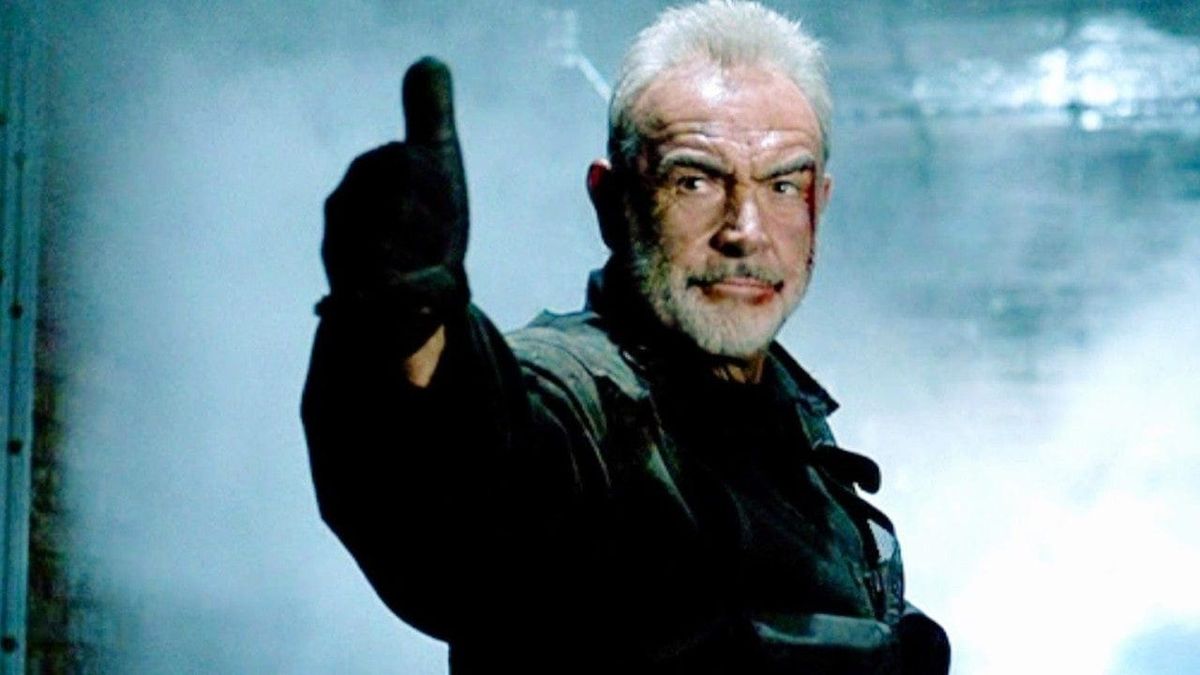
THE ROCK (1996) has a scene that is the epitome of this.
It’s an older film directed by Michael Bay and starring Sean Connery and Nicolas Cage.
Now, I love THE ROCK. The ’90s were a good time for Hollywood action movies.
But THE ROCK takes an extended break from its story to make sure “something happens” because they think the audience will get bored.
Sean Connery’s character escapes from the police so he can see and speak to his estranged daughter. This is great. A clear want and it reveals much of who this man is.
But it doesn’t have much to do with the larger want of the story (which is almost always the dramatic question).
Yes, they decide to make his escape a CRAZY CAR CHASE that destroys a chunk of San Francisco, seemingly kills a bunch of people, and inflicts tens of millions of dollars of damage.
And then everyone pretends it didn’t happen and they go back to the story.
The film recovers. But with lesser actors, and lesser filmmakers, I’m not sure it does.
Plot points without purpose often do the exact opposite of what we want them to do.
They slow down the story rather than pick up the pace.
The magic of throughlines.
I break my own screenplays down to 8 Sequences, and that’s the process I teach. For me, the whole point of story structure is:
- Narrative momentum
- Emotional resonance
So much so that I put those two things into my definition.
Structure: choosing what the audience knows and when they know it in order to maximize narrative momentum and emotional resonance
And of all the different types of structure processes I have experimented with, I have found the 8 Sequences maximize these two things with the least amount of resistance.
To put it simply: 8 Sequences makes my job easier. And I like that.
(Even Syd Field would later emphasize the midpoint and add “pinch 1” and “pinch 2” to Act 2, effectively dividing Act 2 into four sequences!)
To understand why the 8 Sequences are so effective, we have to go back to our most basic concepts of drama:
- Someone wants something.
- That thing is hard to get.
- Something will happen if they fail.
A character’s primary want (almost always the dramatic question) drives the narrative forward. This primary want is composed of smaller wants strung together (Get the witch’s broom, save the princess, find who owns this Barbie).
Put these smaller wants in the right order, and you will get narrative momentum.
If you give them a resolution at the end, you will have a story.
The want drives the action.
Each sequence has a job. It’s too much to go into here, but we discuss each sequence’s job thoroughly in Mastering Structure.
At the end of each sequence:
- An event happens.
- Someone makes a decision about what they will do about it.
- They pursue that want.
This carries them through the sequence, where the result is…
- An event happens.
- So they make a decision about what they will do about it.
- They pursue that want.
And then it happens again.
Of course, the hard part is making it all work together in an emotionally truthful way so we, the audience, actually care about what happens next, and we find the culmination of it all emotionally satisfying.
But the narrative drive? That’s actually kind of easy if we let it be.
Using that Syd Field framing of the timeline, it looks like this:

Some examples.
The tried-and-true STAR WARS example:
Sequence 1 ends with the inciting incident. Princess Leia asks for help, and Obi-Wan Kenobi invites Luke to come along. Luke says no and heads home.
Sequence 2 ends with Luke finding his farm destroyed and deciding to join Obi-Wan Kenobi. They need to find a ship.
Sequence 3 ends with Luke, Obi-Wan, Han Solo, Chewbacca, and the droids leaving Tatooine. They want to deliver R2 to Alderaan.
Sequence 4 ends with the heroes being captured. They want to turn off the tractor beam and rescue the princess.
Sequence 5 ends with R2 turning off the trash compactor, and their want shifts from rescuing the princess to getting off the Death Star.
Sequence 6 ends with escaping the Death Star. They want to get away and deliver the plans to the Rebel base.
Sequence 7 ends with the plan set and they launch the attack.
Sequence 8 ends with a bunch of medals for everyone but Chewbacca.
There are plenty of structural interpretations of STAR WARS, and it’s a good example of “Well, depends on how you look at it.”
What throws many people is how long Act 1 is. It’s 40 minutes!
They assume Act 1 can’t possibly be that long, so they look for other ways to interpret it. But if I am faithful to my definitions, that’s just how long the darn thing is.
THE AVENGERS
Sequence 1 ends with Loki escaping, and SHIELD wants to form the Avengers.
Sequence 2 ends with the Avengers formed and now they want to locate Loki.
Sequence 3 ends with Loki captured and the Avengers wanting to find out what the plan was and what SHIELD is up to.
Sequence 4 ends with the Chitauri attack on the heliocarrier and the Avengers wanting to defend the ship.
Sequence 5 ends with all the Avengers split apart and each Avenger trying to figure out their next move. ← This is the movie deliberately slowing down here.
Sequence 6 ends with all the Avengers choosing to defend New York City.
Sequence 7 ends with the first wave defeated, and just when they think they’re done, a new giant wave of Chitauri attacks. Iron Man makes the choice to sacrifice himself.
Sequence 8 ends with all the Avengers having a nice dinner.
THE LOW POINT
Notice how these two films handle their “low point” differently.
In THE AVENGERS, the low point is the end of Sequence 5. Sequence 6 is the Avengers sulking about the loss, and eventually dusting themselves off to fight again.
This approach is illustrated in SAVE THE CAT as the “Dark Night of the Soul.”
I don’t mind this approach, but don’t limit yourself to it.
When you use the low point as the end of the sequence, and follow up with “low point” energy, you can really slow your story down.
Why? Because when they have the sads, there is no real want to drive the narrative forward. Now, I think THE AVENGERS pulls it off well, as do BRIDESMAIDS and many others.
But ARGO does not. It’s a different type of story but still tries the “All is lost” sequence with a sulking Ben Affleck when it absolutely does not fit his character.
We’re even kind of annoyed with him, because we know he’s not going to stop (it’s not who he is), so what are we even doing here? Get on with it!
It’s an entirely unnecessary, conventional moment in a story that does not need it or want it.
STAR WARS goes a different direction.
The end of Sequence 5 comes right after the low point of everyone nearly being killed in the trash compactor. But after that moment, they go from going deeper into the Death Star to now LEAVING it.
Through Sequence 5, they’re going deeper into the battle station, and from this point on in Sequence 6, they’re on their way out.
The real low point is Obi-Wan Kenobi becoming a force ghost. But notice, this affects Luke’s journey, but not the narrative flow. The story doesn’t change direction at all. Luke is sad for one minute and then off to do what they were going to do anyway.
Examine your own structure.
Whether you write in five acts, or four, or three; whether you write in 8 Sequences or just throw stuff up against the wall and see what sticks.
Look at what happens and how it forces a choice by your protagonist.
Does this choice create a new want and therefore a new throughline?
Are these immediate wants changing and adjusting to events and pushing your narrative forward?
What is the throughline for each section of your story?
Does one exist? If not, is your story dragging because of it?
What reversals and reveals change a character’s tactics in pursuit of their want?
The simplest breakdown of structure I offer:
Act 1 -- I have a problem.
Act 2A -- I think I’ll solve it.
Act 2B -- This is harder than I thought.
Act 3 -- The sacrifice is the solution.
Good structure is liberating.
Answering the big questions should give you the confidence to focus on all the smaller, more important moments in between.
Don’t think of plot as something that just happens to the character. Sure, it may knock them around a bit, but the most important part of that contact is that it forces a reaction.
It forces them to make a choice. The thing they want in that moment changes. And it is that character’s choice that changes the direction of the story, not the plot point.
The Story and Plot Weekly Email is published every Tuesday morning. Don't miss another one.
 Tom Vaughan
When you're ready, these are ways I can help you:
WORK WITH ME 1:1
1-on-1 Coaching | Screenplay Consultation
TAKE A COURSE
Mastering Structure | Idea To Outline