How to find the dramatic question for a character piece.
Not every dramatic question is as easy as "Does the hero defeat the bad guy?"
The Story and Plot Weekly Email is published every Tuesday morning. Don't miss another one.
We are starting a new Writer's Lab next week. We have three sold-out labs right now, which is really gratifying.
When anyone starts a new project in the lab, we work through what I call the pre-outline phase. One of the most important decisions we make in the pre-outline phase is determining the dramatic question.
Sometimes it's obvious in the conception. Other times, especially when we start with a character, the dramatic question can seem more elusive.
So this week, I want to dive a little deeper into the dramatic question and the importance of how we frame it.
As always, let's establish definitions:
Dramatic Question: A question asked in the form of dramatic conflict that the audience anticipates an answer to.
Dramatic writing is filled with dozens of dramatic questions throughout each piece. Moment to moment, scene to scene, act to act.
But it helps a script immensely to have, above all, THE central dramatic question.
While there are stories where the dramatic question isn't asked until the midpoint, and some stories where the dramatic question is answered at the end of Act 2...
The dramatic question is most commonly asked at the end of Act 1, and then answered just before the end of Act 3.
Most dramatic questions are obvious. A character has a problem, and they need to solve it. Will they save the Earth? Will Indy get the ark? Will they convince the INS to let them stay in the country? Will they defeat Thanos?
These are clear, tangible, yes/no questions with zero ambiguity. Who wants what and why? And will they get it?
These big, Hollywood, plot-focused dramatic questions make structuring your story significantly easier.
Why?
Because story structure has two jobs:
- Narrative momentum.
- Emotional resonance.
And the tension built into an effective dramatic question can fuel the narrative momentum nearly all by itself.
You can build your whole structure around it.
But sometimes the dramatic question does not come so easily.
Sometimes how we conceive a story resists a central dramatic question.
This is especially true in more character-focused pieces.
For example, a student had an idea for a short film about a zookeeper who kidnaps an animal from the zoo to collect a ransom.
She was not particularly interested in the ransom plot. It was the character and his relationship with the animal that she wanted to explore.
That's a good instinct!
But this also led her to character-based dramatic questions like, "Will he grow up?", "Will he finally feel good about himself?"
All worthwhile things to think about for the story, but very difficult to structure around.
Dramatic questions that the audience isn't actively aware of do not store enough tension to fuel narrative momentum.
She finally came around to a plot-focused DQ of, "Will he give the animal back, or will he keep it?"
This was closer. At least there is a physical outcome there. But it's still not hitting the target.
Why not?
Because the conflict is internal. We're just waiting for him to make a decision about what he wants. She arrived at this DQ because he eventually DOES give the animal back without collecting the ransom, but the audience doesn't know that.
That's not what they're anticipating a resolution to. Since they are not wondering, will he give it back or not, there is no way to generate tension from it until the moment that the audience is wondering that.
The actual DQ was right in front of her.
The dramatic question is, "Will he collect the ransom money?"
This is what he wants. Other people don't want him to get what he wants. Will he achieve his want, or will he not? That's a dramatic question.
"But the audience doesn't want him to get the ransom money," she said.
That doesn't matter, I explained. He wants the ransom money. And that want drives the narrative forward.
And the audience not wanting him to get the ransom is just as valuable to us as them wanting him to get it.
The tension comes from the audience wanting one outcome over another.
Her job is to answer that dramatic question yes, or no, and do so in an emotionally satisfying way.
And as she envisioned the end: he does not get the ransom. He surrenders the animal willingly instead, which is a much more emotionally satisfying ending.
A plot-focused dramatic question makes your job easier.
We often second-guess ourselves when the character's inner battle interests us more. We overthink it.
We resist a dramatic question because it's too plotty, "But the story is not really about that."
And I get it. I preach "less plot" all the time. Caution is warranted. We have to be smart about this.
But the challenge remains: an internal battle does not lend itself well to a cinematic structure. We have to find a way to externalize it.
Even when we do come up with a dramatic question, we ask, "Does anyone really care about that?"
The answer may be no! But that isn't a requirement for the dramatic question.
The audience doesn't necessarily have to care about the outcome of the dramatic question itself.
Sure, it's nice if we do, but it's not a must for every story.
What's important is that the character cares deeply about the outcome. And we care about the character.
In SATURDAY NIGHT FEVER, no one in the audience really cares who wins the dance contest.
In LITTLE MISS SUNSHINE, no one in the audience thinks the beauty contest really matters.
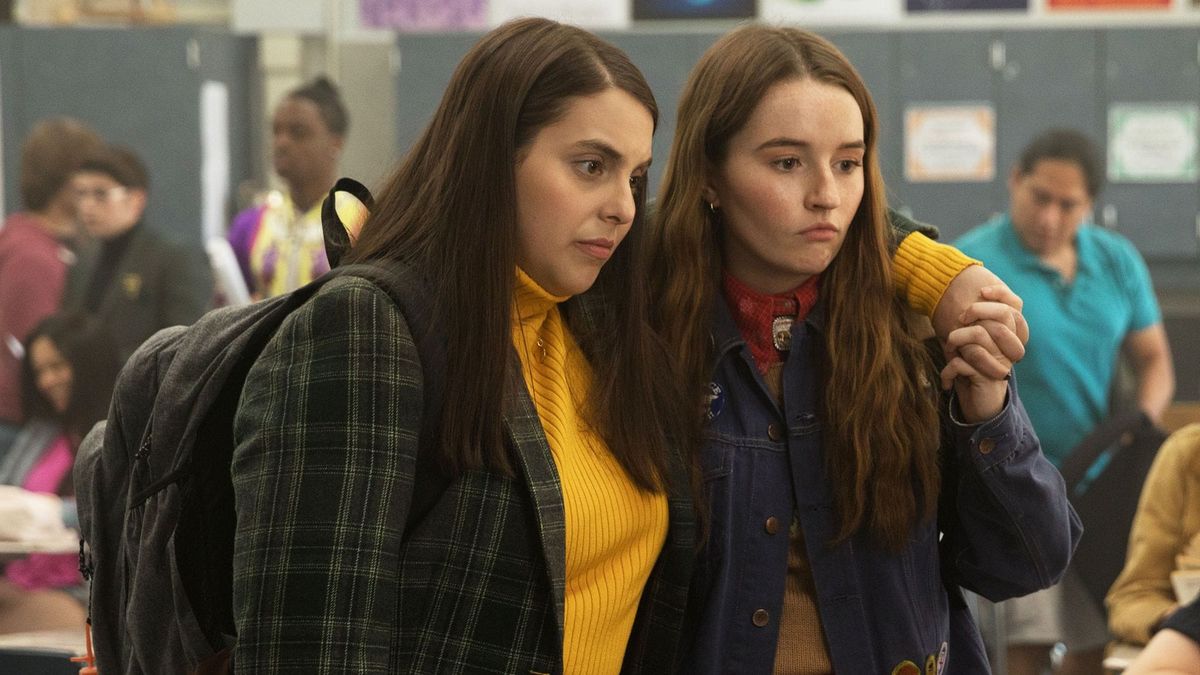
In BOOKSMART, we're not under the illusion that these girls can fill an entire high school experience into one night.
We're not invested in the success of the want itself, we're invested in the characters.
We want to see what happens to them in pursuing this goal and how they handle the outcomes, and we want the conclusion to be emotionally satisfying, no matter what it is.
Their pursuit of this dramatic question drives the story and fuels the narrative momentum.
So if you're stuck on the dramatic question, look to the primary physical want of the protagonist.
If you don't have one, create one. Don't be afraid if it seems trivial, just as long as it's not trivial to the character.
Just make sure that want represents their inner battle in some way.
We can lean on that drive for dramatic momentum, saving us from manufacturing it through each scene, which is exceedingly difficult to do.
For our student short, the story was really about the relationship between the guy and the animal. The ransom was simply a way in. It revealed character and forced the guy and the animal together in a specific way.
But we are not desperate for him to succeed in his ransom plan like we would if he were fighting bad guys and saving lives.
This is another key point to the dramatic question. It's not always important that the protagonist succeeds in getting what they want.
The resolution is not locked into success or failure, a happy or sad ending. What's important is the audience's satisfaction.
When that character realizes the animal's well-being is more important than anything he cared about at the beginning of the story, it's moving. It's emotionally satisfying.
So don't worry if the character's want seems trivial. As long as they care deeply about it, that is enough to drive the narrative. For us as storytellers, that want will be the easiest thing to structure your story around.
Did you find this helpful?
This is exactly the kind of work that Mastering Structure dives into with every single video.
Learn to identify the structure of your favorite films, but even more importantly, learn to identify the structure of yours.
When you finish Mastering Structure, you will see story structure for what it is: a liberating framework that releases your creativity and fuels your individual voice.
By making crucial decisions early on, each subsequent story decision gets easier and easier, allowing you to have fun writing again.
And you will see the blank page as an exciting opportunity rather than a nerve-racking emptiness.
Enroll in Mastering Structure.
Want to have even more fun? Jump into the full Story and Plot Bundle and save hundreds
The Story and Plot Weekly Email is published every Tuesday morning. Don't miss another one.
 Tom Vaughan
When you're ready, these are ways I can help you:
WORK WITH ME 1:1
1-on-1 Coaching | Screenplay Consultation
TAKE A COURSE
Mastering Structure | Idea To Outline