When you're struggling, it's usually one of three things.
We all hit walls with our writing sometimes. One of these is usually the culprit.
The Story and Plot Weekly Email is published every Tuesday morning. Don't miss another one.
We all hit walls with our writing sometimes. Whether it's personal issues or story issues on the page, we feel like we can't move anything forward.
The worst occurrence for me was in 2011 when I had just moved back to Los Angeles. I was stuck, and so many of my old tricks weren't working.
It was months. I had time to write. I had the opportunity to write.
But I could not get anything coherent down on the page.
It was awful.
This experience led directly to so many of the processes I use now for myself and teach to others, especially in Idea to Outline.
I never wanted to go through that again.
We usually want someone to blame.
It's human nature. This must be someone's fault!
Unfortunately, this is mostly an individual effort. Even when we work with partners, it's sometimes just ourselves and the keyboard.
So we have no one to blame but us. And that is what we usually do!
We have two choices then.
We can lean into this blame angle by doubting ourselves and our talent, and asking who we think we are trying to create something wonderful in the first place.
For some reason, this may even feel good, as we claim to be victims of cruel fate.
You can probably guess how I know this.
This approach has many problems, not the least of which is that it is guaranteed to make things worse.
A better way is to accept the responsibility to fix it and problem-solve.
These ideas are so important to me that we spend an opening video in Mastering Structure discussing them.
Screenwriting is problem-solving.
It doesn't matter if it's a moment, a scene, or structure.
Most everything I teach comes down to three pillars. I have found that when I am struggling, one of these has broken down.
Those three areas are:
- Story and emotion.
- Simplify.
- Confidence.
Story and Emotion.
These are my core values. These are the two things I would put up in my company's break room if I had one. But in our case, we would actually mean it!
I prioritize these two things above all else.
Why?
Because we have to make decisions.
This is all we are ever doing, so I want to make those decisions easier.
One of the most important ways I do that is knowing what is important and what is less important.
To do this, I ask myself:
- What story am I telling?
- What emotion am I trying to evoke?
These two questions alone can get you out of nearly any structure, scene, or character problem.
They are your true north.
These answers will remind you of your goal. And they clarify what shiny thing is distracting you, or helping you achieve your intention.
Getting away from these two things, putting something ahead of them, will always make your job more difficult.
Simplify.
This is about decision-making. Simplify the process by removing the clutter.
A clean line of action can support more emotion because the audience isn't wasting mental energy trying not to be confused.
Making a character a little bit of this and a little bit of that all at once doesn't look like a complicated character, it looks like you didn't make a decision.
Don't introduce a three-dimensional character. Introduce a one-dimensional character and then reveal the other two dimensions later in the story.
Sometimes we're attracted to complicated solutions because they make us feel smart, and sometimes we need them because we're desperate.
But complicated decisions usually work around the problem rather than actually solve it.
Always try to achieve the same thing with less.
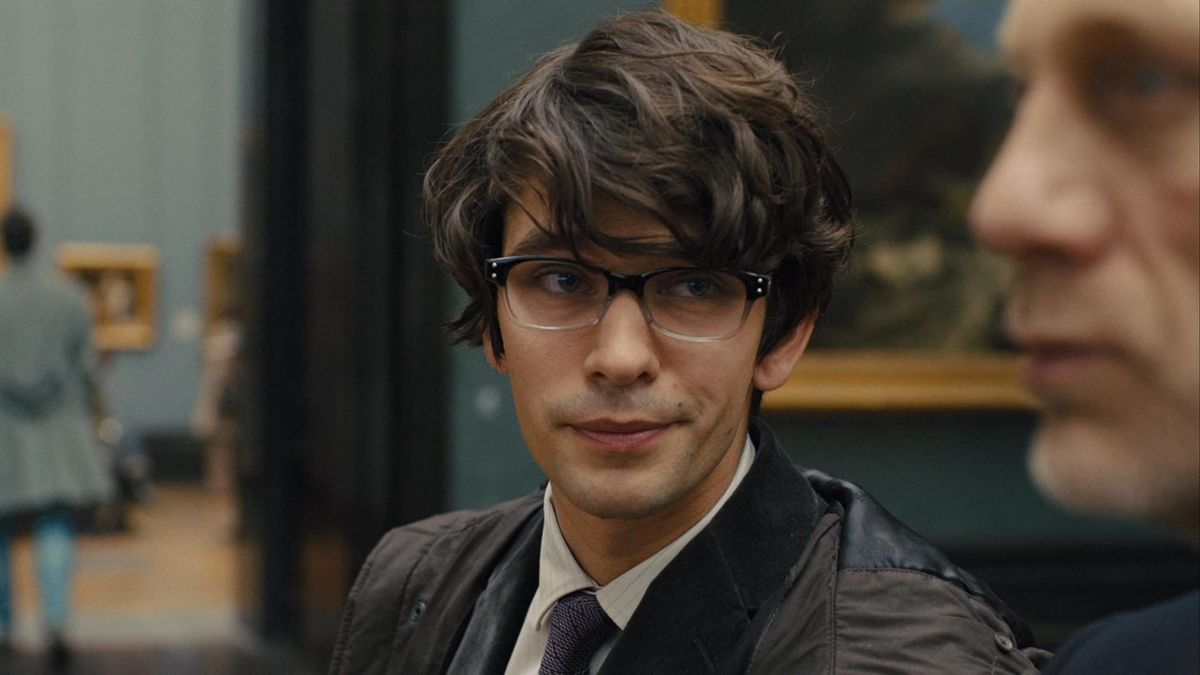
I have a favorite example of this from SKYFALL.
In it, Bond's early goal is to find a bad guy. He spends all of sequence 3 requalifying for 007 status.
When he's done, we don't have a full investigative sequence of him finding where the bad guy is hiding. Instead, we have Q give him a plane ticket and tell him where the bad guy is!
That's it! Straight to it!
And no one misses the whole sequence of trying to find the guy. Because the story had better things to do.
I used this same tactic in a script of mine.
Instead of a big scene or sequence showing how someone found a car, the supporting character just showed up and said, "I called in a favor and got his GPS location."
Why? Because that story had better things to do.
Now, the protagonist still had to pay for that information with an action scene, a confrontation, or some kind of test, but the audience just wanted him to get there and do the fun thing we wanted to see.
We don't want plot. We want the fun thing. We want the emotion.
Attack the actual problem directly. Often, we think we are a slave to our choices. We think because choice A led to choice B we're stuck with those even if we get stuck with choice C.
But sometimes you can make a different choice A that skips B and goes straight to a great choice C!
Simplify the process, too.
Make those big decisions up front. What's your story? What's your dramatic question? What's your fun?
Make those big decisions, and suddenly the tyranny of infinite choices is now manageable. Now, only so many choices will do.
Simplify, simplify, simplify.
- Great characters.
- Great scenes.
- The order you put them in.
This is hard. But it doesn't have to be complicated. You can learn yourself right into knowing nothing.
Confidence.
There is nothing in life that cannot be performed better with confidence. Confidence allows us to be decisive, to make a choice, and to go.
You've seen this in every type of performance.
A confident stand-up puts you at ease. A nervous stand-up is hard to watch.
A confident athlete performs. The athlete that lacks confidence strikes out, drops the ball, or misses their free throw.
The same way you can recognize a nervous performer on stage, you can recognize a nervous writer.
The writing is generic, a bunch of non-choices put together. The writer meekly asking for permission to be there.
Always make choices.
Less-than-awesome choices are better than having no choices at all.
This is a hard lesson. Because we don't want to feel wrong, we refrain. But making a choice — any choice, especially early on, is more important than making the "right" choice.
We have to acquire the habit.
The more choices you make, the better those choices become.
The better we get at knowing what we want to achieve and then achieving it, the more confidence we earn.
The more confidence we earn, the more we control the page.
Non-choices drag everything down.
All three support each other.
These are not in any order. They are mutually supportive. As you get stronger with one, you get stronger in the others.
As you buy in more and more to the value system, the more you simplify the writing. The more you simplify the writing, the more confident you are in your choices. The more confident you are in your choices, the more you buy into what's truly important.
These are what decisive and compelling choices are made of.
Which one is undermining the work?
So if I am struggling, and I mean frustrated struggling, the first place I look is these three things. Which one of these have I abandoned?
Have I diluted what is important? Have shiny things distracted me away from the story and the emotion of that story?
Am I complicating what should be simple? Am I just checking a box and trying to act like a problem is solved, or am I actually solving it?
Is this a confidence issue? What I think is the true source of what we usually call writer's block.
Am I demanding something beyond just telling a good story well?
Am I expecting to impress, and now suddenly scared that I might fall short?
If I dig deep, if I am truly being honest with myself, I can figure it out.
You don't have to attack the culprit.
These are mutually supportive principles. Each one makes the others stronger.
If your processes are falling apart because your confidence is a no-show, trying to will it into existence may lead to more frustration.
In that case, double down on the story and emotion and simplify what's in front of you.
As you see results from that, you know what will get boosted?
You guessed it -- your confidence.
You are not helpless.
Screenwriting is a challenge. There is no way around it. But you are in control of what goes on the page.
You won't have much control once it goes out into the world, but you do at this phase.
So enjoy it. Relish it. Don't relinquish that control over fear and insecurity.
Stay solution-focused. Always keep the next steps ahead.
And remember, this is fun!
The Story and Plot Weekly Email is published every Tuesday morning. Don't miss another one.
 Tom Vaughan
When you're ready, these are ways I can help you:
WORK WITH ME 1:1
1-on-1 Coaching | Screenplay Consultation
TAKE A COURSE
Mastering Structure | Idea To Outline