Your screenplay’s real estate question.
Does this scene, this chracter, this line, earn its place on the page?
The Story and Plot Weekly Email is published every Tuesday morning. Don't miss another one.
Sooner or later, every screenwriter has to deal with what I call the "real estate question."
That is, is this thing on the page, whether it’s the scene, a character, or the words themselves, worth the amount of space it is taking up?
Do they EARN their place?
Or are they taking up valuable real estate?
I recommend not dealing with this too much until you're rewriting.
As I've gotten older, I tend to edit more as I write, and I don't think it's a great habit.
My drafts do tend to come out pretty polished, so there are some advantages! But I suspect there are some interesting choices that I might have discovered had I let myself go a little bit more.
So, write first, edit later.
Either way, however, the real estate question is going to come.
The amount of space on a screenplay is valuable land. More so than, say, the page of a novel.
It's just supply and demand. There are fewer pages in a screenplay and fewer words on them.
There are two reasons for this limitation.
First, there are expectations that a screenplay should be a certain length. Usually somewhere between 90 and 120 pages.
This has to do with screen time and budget variables established long ago.
While there is no “rule” to how many pages are allowed (a screenplay with 184 pages sold to Sony just this year!), any more than 120 pages and it really starts to call attention to itself.
I absolutely do not recommend going over 120 pages, and I fight like hell to get my own screenplays below it.
Second, a screenplay should be able to be read in one sitting.
That doesn’t always happen, of course, but it shouldn’t be the screenplay’s fault when it doesn’t.
“I read it in one sitting!” is an exemplary compliment for a novel.
It is the standard for a screenplay.
So if you put something in your screenplay, you need to be darn sure it earns its place.
And don’t think the reader (your current audience) doesn’t sense when something isn’t necessary either.
They notice. They may not consciously think it, but they learn quickly whether everything they’re reading really needs to be there.
And if it doesn’t, they lose a little trust. And they start skipping.
Why?
Because they’re not convinced what you wrote really needs to be there, so why read everything?
But the real estate question goes both ways.
And this is one of the notes I give most often: “This moment deserves MORE time and MORE attention! Give it more space on the page.”
So, as much as we ask, “Do I need this?”
We also want to ask, “Should this be more? Should it take up MORE space?”
Because without that space, it doesn’t work, and it should be cut.
But if you GIVE it space, suddenly it elevates everything.
This could be a character moment. It could be an emotional moment. It could be a huge moment for the story.
Is it something we really want to linger on to make sure the audience gets it?
(A hint for this: if you really want the reader to understand and absorb something, give it its own paragraph.)
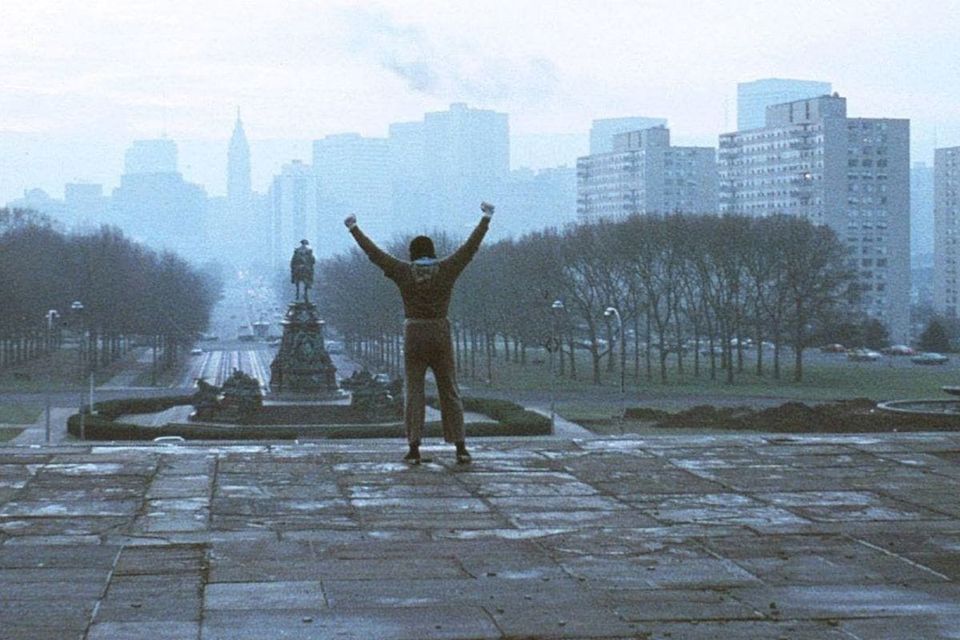
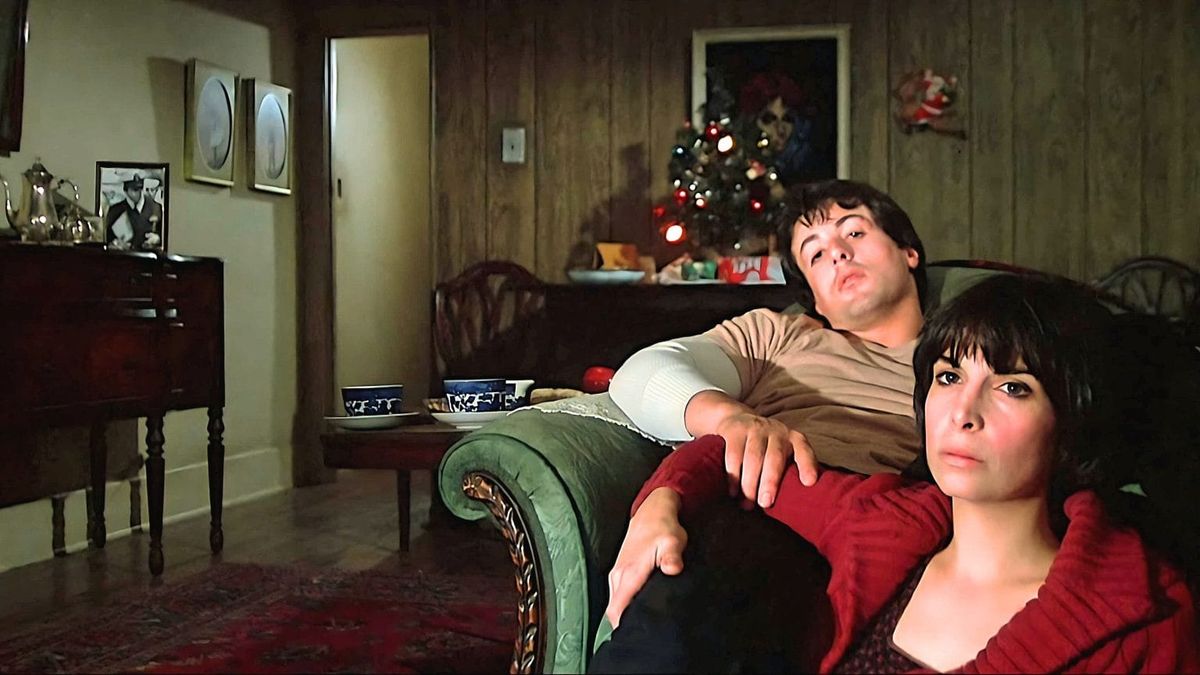
I saw an interview with Sylvester Stallone recently, where he told the story about how they almost didn't shoot the scene in ROCKY where Rocky says, "I just want to go the distance."
It's one of the most pivotal moments in the story, where we truly understand how he sees himself and his aspirations in a fight that he knows he can't win.
And the director and the producers didn't see the importance of it. They shot the rest of the scene, but not that part. Only Stallone wanted it. At least, according to Stallone.
This was a scene that demanded to be more. And the movie was better for it.
Some moments need more space to work.
And if you rush by them or drain them of that energy, they look like moments that should be cut.
This can be obvious when dealing with a scene. Should this scene stay, or should this scene go?
But we also find ourselves writing small little lines in our script. Maybe it's a detail we add, a little moment.
Now, I like those lines. I like those little touches of life being lived. But page count matters. And if we're in a battle over it, then every line matters.
And if the reader at some point detects there are a lot of lines in our script that don't go anywhere… That bond of trust we've worked so hard to establish starts to show cracks.
Use it or lose it.
In these cases, it's not whether the line of action takes up too much space, but whether it takes up ENOUGH space to really work, and therefore be worth keeping.
Some examples:
This is from a student's script where an elderly couple races inside an RV while bad guys in a sedan (the headlights) chase them.
This seems perfectly fine, right? Quick writing, good paragraphs. Your eyes move vertically at a nice pace.
If you left it alone, you'd be fine.
There's nothing here screaming to be cut.
But.
Look at that line: "Opens a drawer, searches, finds what she's looking for. A box of nails."
What is the purpose of that line? The purpose is that she grabs a box of nails. That's it. That's all she needs to do here.
So why is "searches, finds what she's looking for" even there?
Sure, it hints at something. Perhaps the bad guys in the car zoom closer and she can't find the one thing she thinks will help. The nails!
There can definitely be some fun tension there.
Maybe Harry put the nails somewhere else, and she's screaming at Harry and Harry's driving, the stress getting to him, and the bad guys are RAMMING the camper and she just wants to know where the damn nails are, and poor Harry can't remember where he put them...
So it could be a moment that adds character, relationships, and fun.
But none of that is there. Here, it's just, "searches, finds what she's looking for."
She wrote that moment for a reason. Something was there that resonated for her. She discovered something that wasn't planned as she visualized the scene in her head.
Discovery is a huge part of the fun!
But she didn’t do anything with it.
So we have the choice: do we want to make a meal of this moment and explore it, as I described above? Or do we just cut it altogether?
You might be saying, "What's five words? Especially with a sentence that reads well, and the extra beat of 'searching' gives us a nice visual. Does it really matter that much?"
Maybe. Maybe not. But look at what the paragraph looks like when the line is cut.
It now takes up only one of the page's 54 lines instead of two. Do you think that extra line will be valuable real estate when you have to cut this screenplay from 126 pages to 104? You bet your ass it will be.
So we make the choice to either add more lines and have fun with it, or just cut it and save the space.
Now look at the line below it.
Same question for "hesitates a nanosecond."
Why? Why does she hesitate?
Everything else is necessary to visualize the action, but how does the hesitation add value?
It could. It could be a moment where she thinks about other cars later on.
We could create tension where she doesn't want to throw the nails on the road, and Harry is freaking out for her just to drop the damn things!
Again, this wasn't planned as she conceptualized the scene, but she discovered something that could be worth following.
Maybe Ivy is being ultra-precise, and the bad guys are swerving to avoid the oncoming nails, and she has to really get the timing right, and it turns out she's a 70-year-old James Bond type.
In either case, we could have an unplanned moment that reveals character and relationships, and is fun.
But none of that is there now. Now it's just "hesitates a nanosecond" with no clarity of actual intent.
So the original decision comes back: do we use it or lose it?
Either add the lines required to make it evoke an emotion or get rid of it entirely.
When we do this exercise in class, we can often cut 10%-15% out of a single page. That may not sound like much, but over 126 pages, you could now be looking at 114.
Everything is a choice.
I consider this one of my primary jobs as a teacher: to establish the expectation that everything that goes on the page is a choice.
Even if it's random. The randomness itself is a choice.
This is the primary difference between an emerging writer and a great writer. The great writer fills their screenplay with one choice after another.
No moment is left empty.
No moment is left to chance.
It's the non-choices that drag a screenplay down faster than just about anything else.
So at some point with every screenplay, go through every line, every moment.
Ask yourself:
- Does this line or moment earn its place on the page?
- If it does earn its place, would it serve the same purpose and evoke the same reaction with less?
- If it doesn’t earn its place, would it do so if it had more room to explore, to linger, or to breathe?
Two is more common than three.
But three is still more common than we think.
The Story and Plot Weekly Email is published every Tuesday morning. Don't miss another one.
 Tom Vaughan
When you're ready, these are ways I can help you:
WORK WITH ME 1:1
1-on-1 Coaching | Screenplay Consultation
TAKE A COURSE
Mastering Structure | Idea To Outline