How to write a passive protagonist.
Can't have one, right? Like most go-to notes, it’s mostly true, but with enough nuance that the definitive statement of it rings false.
The Story and Plot Weekly Email is published every Tuesday morning. Don't miss another one.
“Your protagonist cannot be passive.”
You’ve likely heard this before. It’s a go-to note for people who want to sound like they know what they’re doing.
Like most go-to notes, it’s mostly true, but with enough exceptions and nuance that the definitive statement of it rings false.
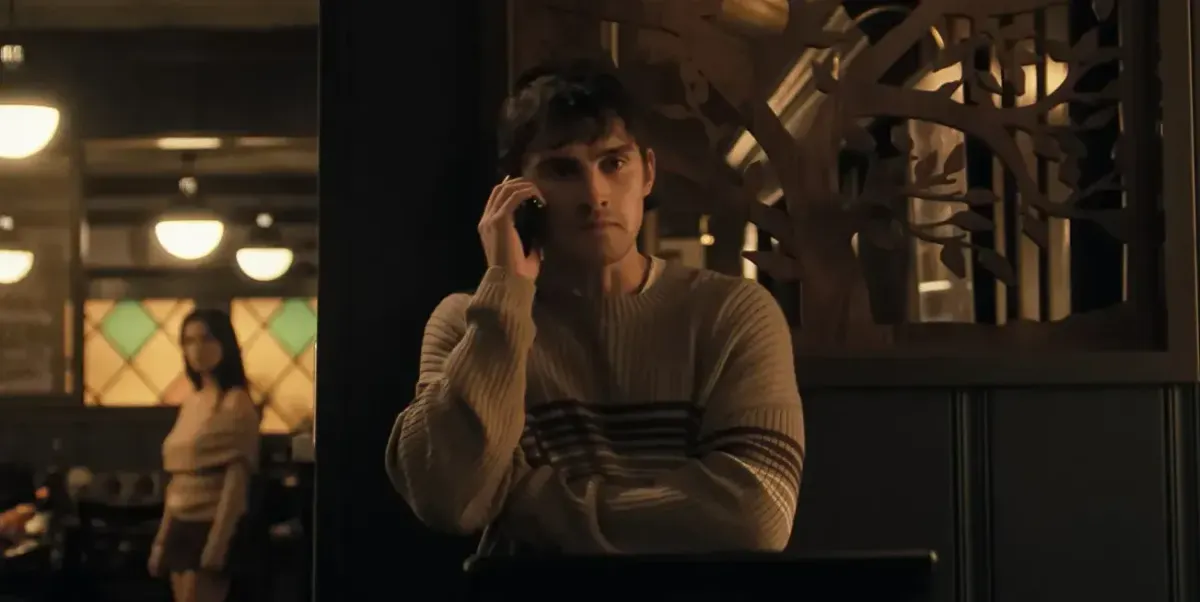
Take OBSESSION, the hit of the summer. It’s a phenomenal experience, and the protagonist, Bear, mostly tries to negotiate with his problem rather than solve it.
To be fair, his passive nature, in all aspects of his life, is a well-defined character flaw. Along with being incredibly selfish, it’s integral to the story. (I can’t get into who the real villain of OBSESSION is without spoilers, so let’s save that for another time.)
In the very first SCREAM, the protagonist Sydney Prescott is a shockingly passive character as well. She mostly reacts to the events around her.
However, unlike Bear, being passive isn’t her issue; it’s just that events around her are so much bigger and coming at her so fast.
If “your protagonist can’t be passive” was always true, both these wonderful films would fall apart. And neither does.
So there are exceptions. Yes, of course, there are. There always are.
And yet. Making a story work with a passive character is still extremely difficult.
The two movies mentioned were not just written well; they redefined the genre (well, we’ll see with OBSESSION, but I suspect) by tapping unexpectedly into the zeitgeist.
The well-written part you can repeat. Redefining the genre and becoming part of the culture, not so much.
But why is that?
Drama starts with a want.
The want is what creates conflict.
- Someone wants something.
- They’re having trouble getting it.
- Something will happen if they fail.
Even a passive character WANTS something. They want to be left alone. They want their normal life back. They want their new girlfriend to act normal. They want the killer to be caught.
If someone doesn’t pursue their want, there is no conflict. No conflict, no drama.
Of course, you can create conflict by giving the antagonist the want! And often, stories start out this exact way. See SCREAM.
But we’re not following the antagonist. We’re following the protagonist. So this want, and this conflict, don’t extend from scene to scene to give us momentum.
You’d better be as well-written as SCREAM to pull this off.
So when we take the exceptions into account, the truth emerges as it does for all these go-to notes…
It’s not that your character “must” be active; it’s just that it is so much easier to write a good story when they are.
I try to write with (and teach) the adage that there is no reason to make our job more difficult unless the payoff is worth it. And there are few exceptions when the payoff is.
Active characters simply make writing the story easier.
Their choices push the narrative.
They want something in one scene. They either get it and it gives them a new want that drives the next scene, or they don’t get it, and it leads to new tactics that drive the next scene.
But it is their want that pushes the story forward. It is their want that gives us context of what we hope will happen and what we fear will happen.
Without those, the question of “what will happen next” is too open-ended to create true tension and momentum.
Each sequence is a slightly different want.
It is the key to Act 2, where so many writers lose their way.
Learn to identify the end of each sequence and how that scene adjusts the want of the protagonist, and you will find a clear narrative every time. (I show you how to do just that in Mastering Structure and Idea to Outline.)
Without that agency, we also risk frustration.
This happens in real life, too. We all have friends and family who complain to us, over and over again, and after a while, our reaction is, “Just do something about it! Quit that job!” or “Break up with him!” or “Stop talking about it and do it!”
If protagonists don’t solve their own problems, if they don’t rise to the occasion and exhibit resilience, the emotional payoff is undercut.
(By their nature, tragedies don’t always have this problem.)
Don’t make your job more difficult.
It’s true, like OBSESSION, your story may be the exception. This is, in fact, possible.
Know WHY it’s the exception.
Make sure this isn’t you just being resistant to notes and the hard work required to get a screenplay to work.
Make sure this isn’t your subconscious circling the wagons around what you think is your confidence.
Articulate exactly why the story benefits. Articulate why the change would be less effective or why it would simply tell a different story.
Do not hide behind the “truth of the character.”
Yes, some characters are more passive than others. No doubt. But is that in the best interest of the story?
- You choose who the character is and isn’t.
- Other than a tragedy, we want to see a character transform or transform others.
- If it really is true that the character MUST remain passive, you need to articulate why such a thing is compelling to watch. (Both Forrest Gump and Chauncey the gardener come to mind here, and they both transform others.)
A note should feel right in your gut.
If you’re getting mixed notes, rely on your gut.
But if it is a chorus of the same note, your gut might be reflecting something other than what is best for the story.
I spent the first ten years of my career this stubborn, and it was not helpful. What I claimed was artistic integrity was insecurity.
Some choices to make your job easier.
I’ve struggled myself with passive protagonists over the years, and here are a few things I have learned.
Define the problem they are trying to solve.
If a protagonist’s want doesn’t define your dramatic question, come at it from this angle. Ask what problem they want to solve.
Often, what first appears as a passive character is simply the ineffective tactics they embrace to solve that problem. This is especially true in Act 2A.
Which leads me to:
For most stories, the protagonist should be proactively trying to solve their problem by the midpoint.
This became a guiding principle for me after a screenplay I wrote in 2008! The first draft just wasn’t working.
The narrative momentum in 2B slowed to a crawl.
After reading my script for the umpteenth time, I realized it was because the protagonist was still reacting to the antagonist all the way through Act 3!
This was kind of hidden because I was so happy with all the scenes. The scenes really worked.
But the macro shape was that we were WAITING for what the antagonist would do next. This was fine in Act 2A, as it created great tension.
In 2B, however, the momentum would have to start and restart over and over again.
So I made a tiny adjustment to have the character do something.
He created a plan to solve his problem and tried to implement it. It failed before Act 3, and Act 3 largely went untouched.
This adjustment gave the act narrative momentum, generated more tension, and deepened the low point when he failed.
It made everything better. With just this little tweak, I went from knowing something was wrong to optioning it twice and eventually selling it.
And it became a principle I now teach: for most stories, your protagonist should be proactively trying to solve their problem by the midpoint.
This means the midpoint needs to be strong enough to do so.
This is a little redundant, as it should be the case anyway. An effective midpoint should signal the end of the road for who the protagonist is in Act 1.
But it’s worth ensuring the midpoint event does this.
Even if the macro is passive, they should still be active in the micro.
That is, we still want to see them making choices and pursuing a want in the scenes. There is no drama without this.
In OBSESSION, Bear tries to confront Nikki at the restaurant and tries to go to the party without her, and each time, she makes it more trouble than it is worth for him.
If an antagonist attacks, the protagonist makes choices of how to react.
Don’t forget the antagonist’s agency, too.
The only thing worse than a passive protagonist is a passive antagonist.
I see this far too often: an antagonist has a want, and the protagonist spends the movie dismantling it. The end.
But it is far more fun to see the antagonist react and make new choices as well. Give them opportunities to make choices in response to the protagonist that would surprise even themselves.
The more passive the protagonist, the more active you want them in Act 3.
Like much of what we talk about, it is less of a rule and more about recognizing the nature of story.
In Act 3, we often look for a protagonist’s plan to solve their problem by attacking, defending, or escaping.
If they have been passive through a good chunk of their story, we will have less patience if they decide to “defend” rather than ATTACK at its conclusion.
The audience is likely dying to see them take some control.
Even in OBSESSION, Bear does exactly this in Act 3. He actively tries to solve his dilemma.
The only example that I can instantly think of that pulls off the passive ending well is FATAL ATTRACTION. Dan (Michael Douglas), who has only fleeting moments of true agency throughout the film, defends his family and home against Alex (Glenn Close) in Act 3.
But it’s worth noting, FATAL ATTRACTION famously struggled with its ending and settled on the final one in reshoots. What the audience really liked was seeing Beth (Anne Archer) shoot Alex dead!
Every story has its own integrity.
This is exactly why it’s best to define the story as soon as we can.
That’s when you really start to make decisions. That’s when you can decipher the onslaught of notes and determine which ones help and which ones do not.
A passive character is not inherently bad. It’s inherently more challenging.
There’s a difference.
And far more often than not, they’re not really worth the hill you have to climb to get them to work!
But if the passive nature of your protagonist is at the heart of the story, and you really feel like you’ve met the challenge of narrative momentum and emotional resonance…
Don’t get scared off by a rule that isn’t a rule at all, but a warning.
Some of our best stories didn’t, and we’re all the better for it.
The Story and Plot Weekly Email is published every Tuesday morning. Don't miss another one.
 Tom Vaughan
When you're ready, these are ways I can help you:
WORK WITH ME 1:1
1-on-1 Coaching | Screenplay Consultation
TAKE A COURSE
Mastering Structure | Idea To Outline