Whose story is it?
We can't tell a story unless we decide what story we're telling. And that means deciding whose story it is.
The Story and Plot Weekly Email is published every Tuesday morning. Don't miss another one.
I grew up watching Siskel & Ebert. I watched when they were a PBS show called "Sneak Previews" all the way through their syndicated show, "At The Movies" until Gene Siskel's death.
It's impossible to measure just how much they influenced my love of movies.
Through high school, I reached for Ebert's Home Video Companion more than I ever did for a school textbook.
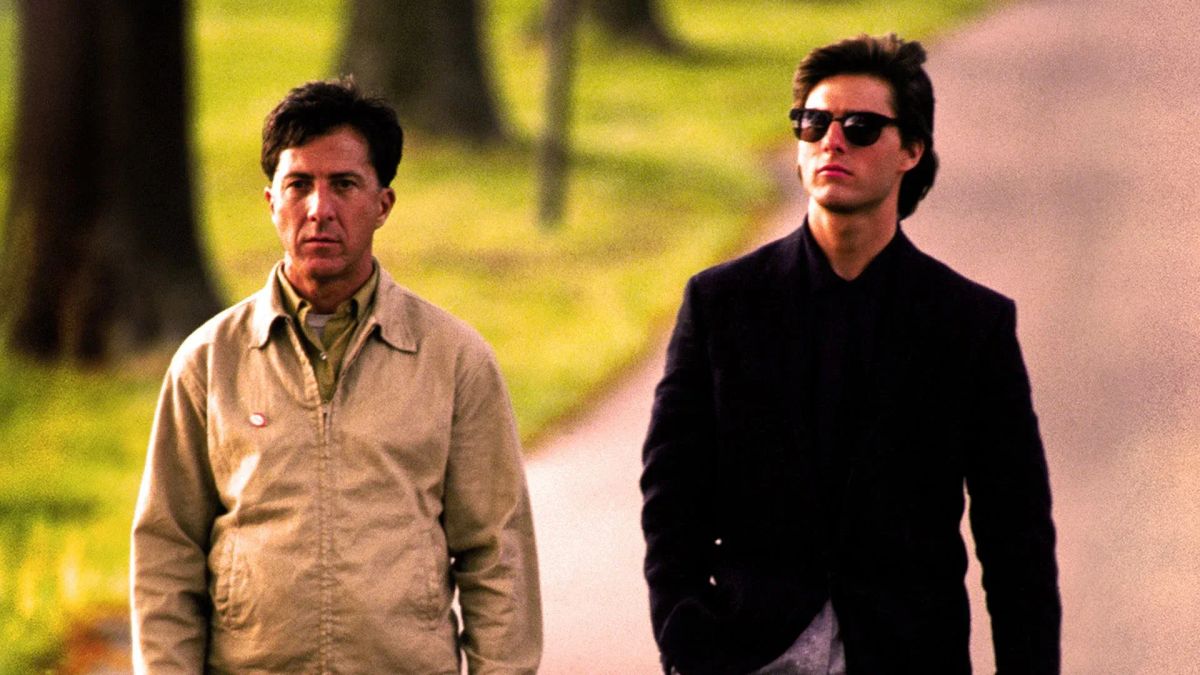
In 1988, Ebert talked about Tom Cruise's superb performance in RAIN MAN and how it was Charlie Babbitt who changed in the movie, and therefore it was his story.
This idea stuck with me: The story belongs to the person who changes.
Despite overwhelming evidence to the contrary, this idea remained with me until many years into my screenwriting career.
But it's not true.
Sure, the story belongs to someone. But it's not always the person who transforms. And sometimes it's the story of multiple people!
In either case, we as storytellers must decide something very simple and very basic.
Whose story are we telling?
The only wrong answer is to not make a choice at all.
What is story?
My working definition of story, the one that I use and the one that I teach:
The transformational journey of a human being.
I often point out that my definitions are not designed to classify elements. I am not an academic, and I am not focused on identifying or classifying anything.
I will, of course, do that, but it's not my goal.
My goal is to make my job as a screenwriter easier, and in doing so, teach you to make your job easier as well.
Defining story as the transformation helps me focus on the emotional spine of the narrative.
This transformation is what gives the narrative meaning. It allows the fun, drama, thrills, and excitement to tap into deeper emotions that linger longer with us.
And we remember emotions far more than we remember information.
But we can't tell a story unless we decide what story we're telling.
And that means deciding whose story it is. As a reminder, there are three types of story.
- The story of a person who transforms for the better. This can be a little or a lot.
- The story of a person who remains steadfast and therefore transforms those around them.
- The story of someone who transforms for the worse, transforms too late, or fails to transform when they needed to. Each has tragic consequences and is called a tragedy.
So, before we start writing, we must make this choice.
Whose story is it? And what type of story?
Sure, sometimes this is very easy. That's great! Make the choice and move on.
But what about when it's NOT so obvious? What about two-handers? And relationship movies? And ensembles? What about when the choice we make ends up making our job harder, and not easier?
Keep the story first.
I named my teaching Story and Plot because realizing the difference was one of the biggest leaps in my writing.
Focusing on plot when we should be focusing on story is a surefire way to get lost in the weeds.
The biggest mistake people make with choosing whose story they're telling is that they simply don't make a choice at all.
They put plot first and foremost. Things are happening. There is action. There is tension. All good things.
But.
Because there is no unified emotional throughline, the plot has no emotional impact. And the plot's job is to evoke emotion.
Plot with no story or emotion is all processed sugar and no lasting energy.
It runs out, and soon you need more plot to make up for the plot you lost, and it cannot sustain itself. It all comes crashing down in an unsatisfying mess.
Plot serves the story. It can rarely survive on its own.
A plot-first mentality is the most common reason writers violate narrative POV and muddy up whose story they're telling.
They impose plot mechanics on the narrative, and it takes over.
I watched a movie this weekend by an elite team of filmmakers, and the desire to surprise the audience outweighed their desire to satisfy them.
The result was a second half, especially the third act, that was plot-heavy, with no one left to root for, no ending to hope for, and inconsistent motivations that don't make a whole lot of sense.
It was fun, well shot, well acted, and with great scenes.
And it largely falls flat.
The emotion afterward was more about the feeling of what could have been rather than what it was. Why?
Because it wasn't clear who or what this story was anymore.
Make the choice.
This is the most important thing. Write it down. Put it up against your computer screen if you have to.
"This is the story about this kind of person who goes through this and becomes this type of person."
"This is the story of a person who carries this core belief against all odds, and in doing so convinces others of the same."
What about two-handers?
This is when it gets tricky, right? There isn't one obvious protagonist.
These are usually love stories. A dramatic love story, a buddy movie, or a romantic comedy.
But with two characters of EQUAL importance, whose story is it?
That depends. And it's up to you to choose.
RAIN MAN, for example. Now this is a 38-year-old movie, but I mentioned it above. Ebert was right. It is Charlie Babbitt's story, but not because he's the one who changes, though he does.
It's because the story is told through Charlie's POV. He is the one with a clear want that drives the narrative. Raymond (played by Dustin Hoffman) is reactive to his brother's decision throughout.
This is a two-hander in the marketing or call-sheet sense, but not from a story sense.
You will see this sort of thing in two-handers all the time. Where one character's job is to transform the other. They are often the more interesting and fun character!
But they are, at heart, a supporting character serving another character's story.
Some of my favorites are PLANES, TRAINS, AND AUTOMOBILES and, more recently, PROJECT HAIL MARY.
But then there is THE SHAWSHANK REDEMPTION, where Red tells the story of Andy Dufresne. It's from Red's POV, it's his voice-over, and Red is the one who transforms, yet Red is telling Andy's story, even if it is the story of how Andy changed him.
The true two-hander.
This is when BOTH characters change. In fact, they change each other. But if they both change, they both drive the story, we experience both their POVs…
How do we choose whose story it is?
In this case, we are looking at the relationship as the story.
Each character's story creates a third story, and that is the story of the relationship itself.
Neither person is ready for the relationship in the beginning. They must both transform, and when they do, they are ready for the relationship they want and need at the end.
We structure that story around the transformation of the relationship as much as we do the characters.
Some examples: YOU'VE GOT MAIL, THE NICE GUYS, THE HEAT.
The ensemble movie.
There are two types of ensemble films.
One type is a singular narrative, with a lot of characters.
They are all trying to solve the same problem.
One character may take up more space, like in GALAXY QUEST, or it could be evenly distributed like THE BREAKFAST CLUB, but in both cases, the story is the transformation of the group relationship.
THE AVENGERS is another good example.
The ensemble in these narratives replaces the one-on-one relationship in the two-handers mentioned above.
That is, THE AVENGERS and GALAXY QUEST are essentially buddy movies, but instead of two characters, it's many. At the end, they come together as a team to solve their problem.
Despite having their own one-on-one relationships amongst them, the group dynamic of THE BREAKFAST CLUB stands in for the two-person relationship from a structural perspective. At the end, they come together as a group. Just like a relationship on a romantic comedy does.
There are also multi-story ensembles.
These films have multiple storylines with perhaps a geographic or thematic connection, but are mostly tangential to each other.
MAGNOLIA and DAZED AND CONFUSED come to mind, as does a string of romantic comedies that grew popular 15 or so years ago, spearheaded by the late, great Garry Marshall. These include VALENTINE'S DAY, NEW YEAR'S EVE, and others.
Robert Altman's NASHVILLE is a classic, and I like SHORT CUTS even more.
For these films, I think it's best to see them as true multiple stories inside a framework. Each story stands on its own.
Many television shows with multiple A, B, and C storylines have more in common with these types of features than the others we have talked about above.
I consider them the only exception to my "one movie, one story" approach.
Can you change the story?
Yes. But do so at your own risk and only if you have a very good reason to do so. When applicable, I like to think of it as revealing the true story.
In one of my favorite screenplays, INSIDIOUS, written by Leigh Whannell, the first part of the movie is from the wife's POV. She drives the narrative. We think it's her story.
But the twist at the midpoint reveals that it's the husband's story. From that point on, he is driving the narrative.
It's surprising and very satisfying.
This works for many reasons, not the least of which is that the couple's relationship and their love for their son are at the center.
I think the biggest factor, however, is that it is a clear switch. The screenplay does not abandon her POV and then meander and be indecisive the rest of the way.
It's a handoff, not a fumble. And that makes a huge difference. It takes a bunch of structure nerds to even notice.
It's the emotion.
And this is what we must always remember. We don't adhere to these principles because we're "supposed to do it this way."
We do so because these are tried and true processes to create the most emotionally satisfying journeys.
Sure, you can succeed in other ways, but ignoring such things makes your job more difficult than it needs to be. And if it's going to be more difficult, the payoff should be worth it, too.
And yet it rarely is.
Or you can embrace what we already know to do: turn your narrative over to the story.
Keep the main thing the main thing.
Like magic, you'll tap into empathy, tension, and emotions you never thought you could evoke out of others.
Even more important, you'll have a true north for every single decision you make. Why go into the scary jungle of a screenplay without a compass?
The Story and Plot Weekly Email is published every Tuesday morning. Don't miss another one.
 Tom Vaughan
When you're ready, these are ways I can help you:
WORK WITH ME 1:1
1-on-1 Coaching | Screenplay Consultation
TAKE A COURSE
Mastering Structure | Idea To Outline