What are the protagonist’s expectations for the future?
When we define their expectations and how they feel about them, we define the character.
The Story and Plot Weekly Email is published every Tuesday morning. Don't miss another one.
I have been developing a Notion template for Story and Plot Pro users. If you’re not familiar with Notion, it is essentially the database app of my dreams. I have wanted a central info hub like this forever.
The “killer app” part of Notion is its versatility and configurability, and I have more than geeked out a little bit.
I can guide a writer, including myself, through every step of my process, providing an interactive workbook that asks the right questions to help them make decisions about the story.
One of those small yet vital decisions it reminds me to make is one I too often forget in those early outlines. I don’t know why. Whenever I do make a strong decision about it, it adds significantly to the story.
It’s the answer to a simple question:
What is the protagonist’s expectation for the future?
As soon as I make a decision about this, it affects the character, the scenes, all of Act 1, and the rest of the narrative. It’s huge.
And of course, how exactly is the story going to give them something completely different?
The decision affects everything.
In classic storytelling, Act 1 is the status quo. Different people use different terms for it. Like many others, I call it the ordinary world.
Once you understand what you want from it, however, it doesn’t really matter what you call it.
Story is about transformation.
And this is the period before the change. We define what the protagonist’s world is like before the inciting incident comes crashing in.
Even more important, we define the protagonist.
One of the most interesting ways we do this is by revealing what they expect their future to bring.
Are they looking forward to it? Are they dreading it? Have they given up on it, along with everything else?
Make the decision.
Why is this so vital?
Because it reveals how the protagonist feels about themselves.
It tells us what they think they deserve. What they think their place is. And what they want.
Sure, we can have our own view of this character, but once we see their view of themselves, we instantly get a whole new emotional layer.
Don’t take it for granted.
Make a decision about this. Even if you feel it’s implied in the character. Make a strong decision.
It is one thing to actively choose not to reveal something. That is, after all, its own kind of choice.
It is another for something to be absent because no choice was made at all. That’s a non-choice.
Non-choices are where most screenplays die.
Don’t forget that choice.
As I like to say, don’t treat it like homework. Something we do because we’re supposed to, and we fill out the bare minimum to say we did.
A choice doesn’t add value unless it occupies that space and affects what happens after it.
Use it to further unify your story.
Make sure you track this choice as a data point throughout.
How does the protagonist FEEL about their future?
Do they like where they’re going? When the inciting incident comes, do they welcome it?
Think of Luke Skywalker and Frodo Baggins.
These characters are two textbook examples of the hero’s journey. Yet, both have very different feelings about what they expect from their future.
Luke believes he is meant for something more.
He expects to remain on his planet for at least another year, and possibly longer. He dreads it. It’s soul-crushing. He refuses the call to adventure only because he made a commitment to his uncle.
When the adventure begins, he is excited for the adventure, even if a little naive about the galaxy.
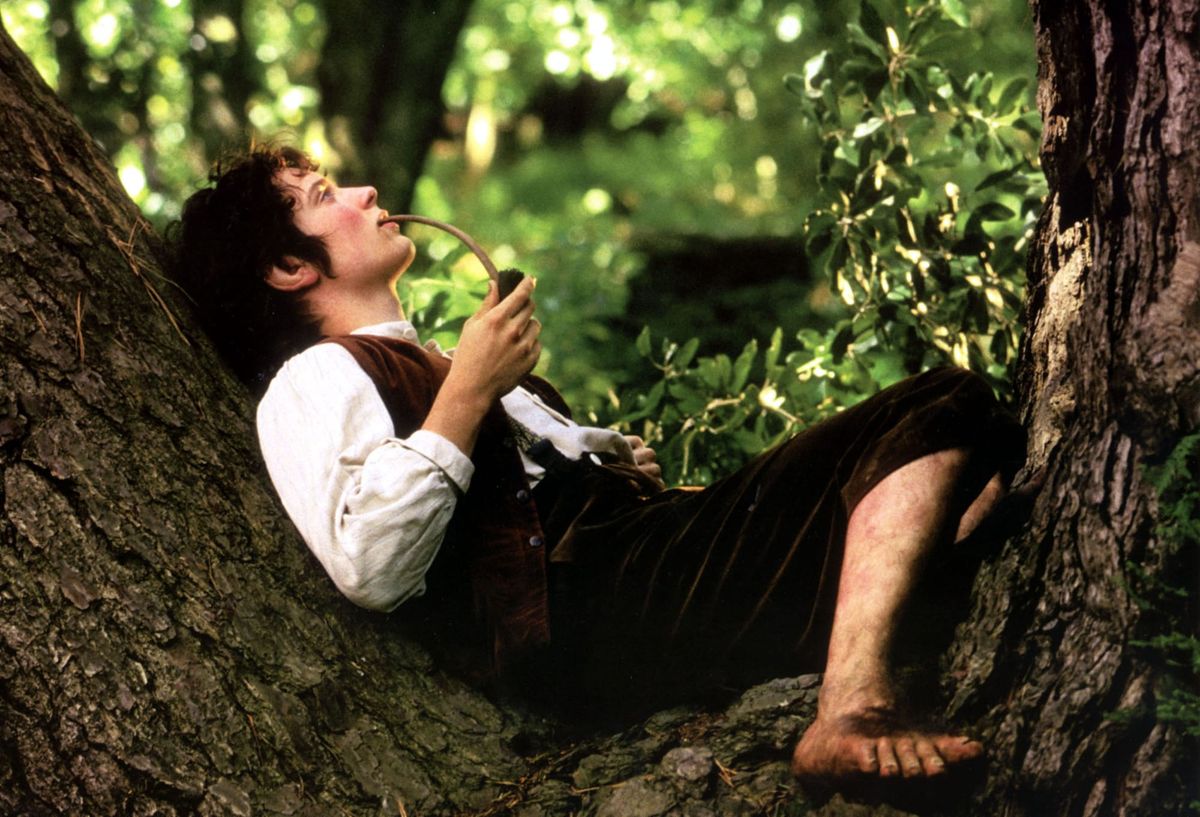
Frodo, on the other hand, expects the calm, simple life of a hobbit, which is just the way he likes it.
He is perfectly happy the way things are and wants nothing to do with adventures beyond the Shire.
It is only when this very peace appears threatened that he agrees to join Gandalf, the whole time wishing that he could just get back to his tranquil, more innocent existence.
Their expectations also tell us how they feel about themselves and what they deserve.
Like Luke Skywalker, Remy in RATATOUILLE believes he deserves more than what his future offers. He wants his exceptional talents to be used for more than the family poison sniffer.
Their adventures offer them an opportunity to prove themselves.
But this works the other way as well.
In MANCHESTER BY THE SEA, Lee Chandler expects nothing to change in his existence, and that is the way he wants it.
In his mind, he doesn’t deserve anything better. He has checked out of life and of caring about anything. Until, that is, the inciting incident.
In SINNERS, the brothers want something better for themselves. They’ve earned it. They want to build something. This brings the wrath of corrupt locals, the KKK, and most especially, a vampire. All because they saw a future for themselves where they could control their own destiny.
Their expectations indicate the extent to which they identify with their perceived future.
Like Lee Chandler, Stereotypical Barbie in BARBIE expects nothing to change. Everything is perfect, and that’s her world. When the perfection collapses, she no longer even knows who she is. She must get that perfection back!
Elle Woods suffers a similar reversal of fortune in LEGALLY BLONDE. She thinks she is about to be engaged and enter a long career as Mrs. Warren Huntington, only to be dumped by the dude instead.
Both characters discover who they really are, and that their happy destiny lies somewhere far away from what they initially expected and wanted.
Measure the distance between the protagonist’s expectations of the future and the final sequence.
How did they feel about their future changing when the inciting incident came, and how do they feel about it at the end?
How do we, the audience, feel about it?
Is it fulfilling? Inspirational? Tragic?
Be aware of this. Much of our overall emotional reaction depends on it.
The protagonist’s relationship to their expectations is inextricably linked to their character.
Yes, a significant benefit of defining what a character expects in the future is seeing their emotional reaction when they receive something else.
It enhances the drama and creates more distance for their journey.
But the true benefit is the why behind this reaction.
When we define their expectations and how they feel about them, we define the character.
Not only does it generate our own feelings about them, but it also reveals how they feel about themselves.
The Story and Plot Weekly Email is published every Tuesday morning. Don't miss another one.
 Tom Vaughan
When you're ready, these are ways I can help you:
WORK WITH ME 1:1
1-on-1 Coaching | Screenplay Consultation
TAKE A COURSE
Mastering Structure | Idea To Outline