The scene's intention and why it matters.
There are a few vital questions that we should always have definitive answers for. Above all is, “What is the intention of the scene?”
The Story and Plot Weekly Email is published every Tuesday morning. Don't miss another one.
There are a few vital questions that we should always have definitive answers for in our scene work.
Above all is, “What is the intention of the scene?”
That is, what change happens that affects subsequent scenes? Now, in the execution of that intention, we have the question, “Whose scene is it?”
Akin to the bigger question, “Whose story is it?”
Most of the time, the answer is obvious. It’s the person changed by the scene. This is most often, but not always, the protagonist.
The change doesn’t have to be huge. They can take a step forward, take a step back, or learn something new.
But sometimes, the story of the scene is how the person driving the action changes those around them.
Recall, there are 3 types of stories.
- Growth. A character changes for the better. They move forward.
- Steadfast. A character remains steadfast and changes those around them.
- Negative growth. A character changes for the worse, fails to change, or changes too late.
For example, two similar scenes in TOP GUN: MAVERICK.
In each, Maverick flies his plane in such a way to prove a point.
Early in the film, he excels in an experimental plane and wins a continuing contract for others. This shows he cares about others, but he fails to grow and destroys the plane.
Later, he does something similar and, in doing so, convinces his supervisor to appoint him mission commander.
In both scenes, Maverick drives the scenes, but who changes (or doesn’t change) is different.
If the protagonist is in the scene, it’s usually “their” scene.
They are driving the scene, or they are being changed by it, sometimes both.
Every now and then, however, a unique scene presents a unique challenge.
A recent example was a member’s scene in the Story and Plot Pro Saturday session.
In the scene, the protagonist is essentially under some mind control. It’s more subtle and interesting than that, but let’s describe it this way for simplicity’s sake.
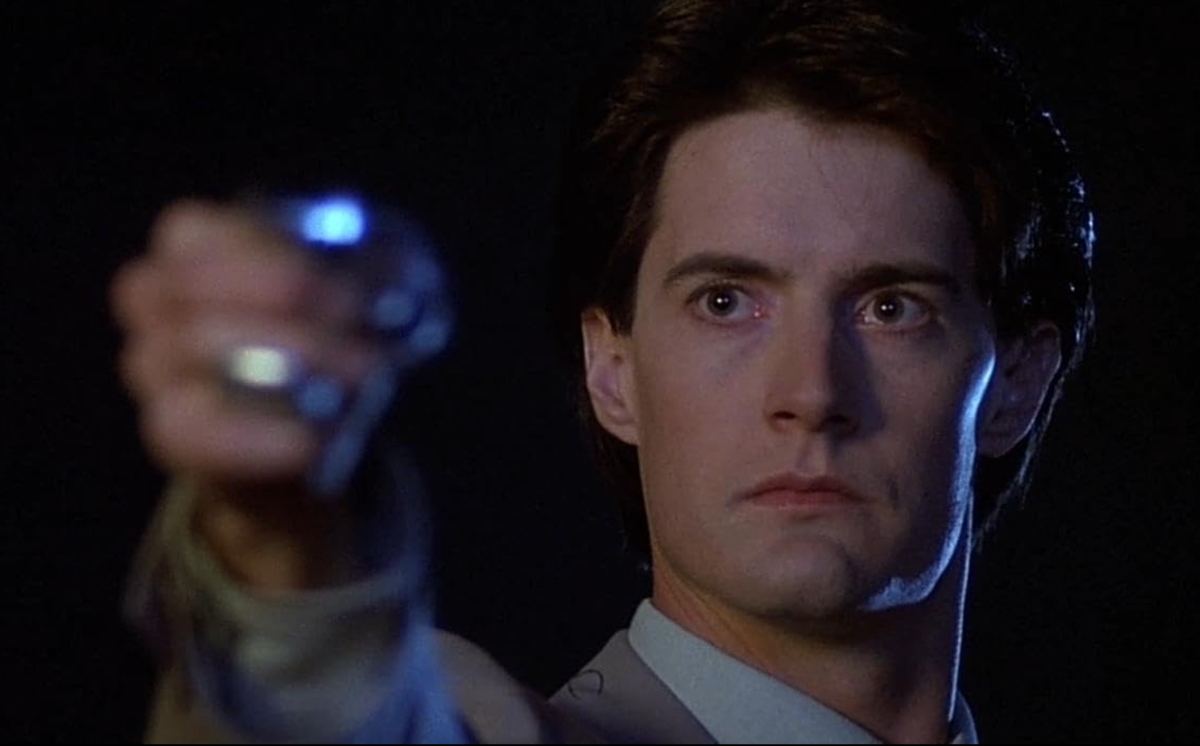
We’ve seen mind control storylines many times before. The TV series FALLOUT is using the device of a literal “mind-control device”, for example. (As a sidenote, one of my favorite “body snatcher” movies is 1987’s criminally underseen THE HIDDEN with Kyle MacLachlan, who also stars in FALLOUT!)
What makes Saturday’s scene a unique challenge was that it was the protagonist under the mind control and supporting characters who witness them commit an act of destruction.
Whenever we’ve been in a scene with this character, the narrative has been through their POV. They are the protagonist, after all.
And suddenly, this changes.
We switch the POV away from the protagonist and onto others, even though the protagonist remains in the scene!
My immediate reaction was that something wasn’t “right.”
This happens sometimes. You instinctively know something is wrong, but because there is no set “tool” in your belt, you can’t quite put your finger on it.
So, you have to figure it out.
This is why we learn these principles. Less so for “it has to be this way,” and more for how to fix what might not be working.
And if you do it right, you get yourself an additional tool in your belt for next time!
At first, I thought it was the lack of agency.
We usually want an active protagonist. Not always. Some characters are passive by nature, and they learn to become more active by the midpoint.
A character that starts passive is already a challenge. One that remains that way after the midpoint is going to be a hurdle that is extremely difficult to overcome.
So, sure, that’s a challenge.
In addition, that switch in POV is disorienting.
We have been following the protagonist’s POV for most of the story, and now we briefly switch to other people for a page.
But is that the problem?
It’s just one scene, right? One. And just one beat within that scene!
Are we really that dogmatic about this?
No. We are not.
A shift in POV can be very effective in a thriller! So can a protagonist losing control!
So these things might be a factor. Maybe. But I doubt either one alone is the thing that made me resist the scene.
We’re not interested in rules as prescription; we’re interested in what lights our path forward to what we want to achieve.
So we might have more luck with asking the bigger, more fundamental question instead.
What is the intention of the scene?
What needs to happen? What is the mini-story of the scene?
After all, this change is the whole point of the scene.
But we don’t even know whose scene it is, let alone the story!
Ah ha!
We may have found our problem with this moment!
The intention of the scene is not clear.
The writer lost control of the narrative.
When the protagonist lost agency, and we switched the POV, the EMOTIONAL flow was lost.
Things happen. There was clear ACTION.
But the scene lost its anchor.
If you’ve seen last summer’s WEAPONS, think about how we would follow someone’s POV until they were “controlled,” and then we would only experience them from someone else’s POV.
It’s a vital question, related directly to the story of the scene: who are we experiencing the scene through, and how do we feel about it?
Remember those two questions.
- Who changes?
- Who drives the scene?
In this particular case, the witnesses are the ones who change within the scene. They witness the event and are affected by it.
And it is the mind control that drives the scene!
So a scene with the protagonist in it isn’t driven by the protagonist, nor is the protagonist the one affected by it.
From a story perspective, it’s not clear why the protagonist is in this scene at all.
Now, of course, the scene does have an intention.
It’s just not clear what it is by the action in the scene.
The intention of the scene is to raise the stakes and to force the protagonist to make different choices to deal with it.
The character that changes IS the protagonist; it just happens in the next scene.
So why doesn’t this work?
Because who changes is often about POV.
We see and feel the change. This shift is emotional. We understand it intellectually, sure, but more importantly, we understand why because we feel it.
When we shifted out of the protagonist’s POV for them to be taken over, we lost experiencing that event with them.
We experienced it through others instead.
So any effect it has on the protagonist is now after-the-fact.
It becomes just information, and we lose the emotion.
If the protagonist realizes what they’ve done later, that’s information we already have, and we lose the ability to feel it for the first time with them.
Instead of experiencing the event and its emotional impact in a single moment, we’re dividing it into two moments, each with less impact.
(A side note: you will actually see this device used for truly horrific events. The storytellers will allow the audience to experience the horror first, and then witness a character being told about it. Because we have already experienced our own horror, it allows us to focus on the empathy for the other character. See: HEREDITARY, IN THE BEDROOM.)
The fix.
The first step to solving any problem: know the intention of the scene.
In this case:
Raise the stakes to force the protagonist to make different choices to deal with the problem.
That is the story of the scene. They knew something was wrong before, but now they realize that they and the people they love are in danger.
The scene eventually creates the groundwork for this, but it feels off.
It feels off because we experience it before the protagonist does. They are changed in the next scene.
So, how do we fix that?
Now, there may be an aspect that requires that it be the protagonist who loses control, but in general, we want to avoid locking ourselves into any choice like that unnecessarily.
Maybe it happens to someone else instead? That would solve the problem!
What’s vital here is the intention, not the execution.
But for this exercise, let’s say it can only be the protagonist that this happens to. And the emotional effect it has on them is why this scene exist.
Here are two key thoughts:
- If it’s the protagonist who changes, we usually want to experience the moment that creates that change with them.
- If we are going to see the damage they do, and they don’t, we will want to use that dramatic irony to maximize the emotion later.
This is why we always go back to the intention. And the intention here is this event affects the protagonist immediately after.
So, that means we are going with #1.
I can think of two possible solutions.
My initial instinct would be to simply cut to after the attack and learn about it with the protagonist.
They black out and we black out with them. We cut to after the violence and we don’t know anymore than the protagonist does.
As they learn what happened, we learn what happened.
We experience this through them. Whether it’s by seeing the aftermath, a video of it, or even an audio, whatever we think is most effective.
But they see it. We see it.
Another option is to remain with their POV.
This is more challenging as it really isn’t the protagonist driving the action so it’s difficult to unify these two things.
But a couple of interesting takes come to mind.
THE WOLF OF WALL STREET shows DiCaprio’s POV driving a Lamborghini while wildly intoxicated and getting home somehow, “without a scratch.”
Only for him to recall later what really happened. He totaled it and nearly killed himself and others.
In GET OUT, the protagonist is hypnotized. He is physically inert. But we remain in his POV through it, keep a very tight connection with his emotional state.
In both these styles of solutions, it is about the emotion.
Yes, the plot happens. The plot is important.
But it is the emotional reaction to that plot and how it changes those characters that is more important.
Screenwriting is problem-solving.
This requires knowing what we are trying to achieve (the intention) and juggling principles, our experience, and our creativity to come up with solutions.
Listen to your gut when you feel like something isn’t working. But don’t entirely rely on your gut to fix it.
Find a process.
- What story are you telling?
- What is the story of the scene?
- Who drives the scene?
- What emotion are you trying to evoke?
In short, what is your intention?
You can’t fix anything until you answer that.
The Story and Plot Weekly Email is published every Tuesday morning. Don't miss another one.
 Tom Vaughan
When you're ready, these are ways I can help you:
WORK WITH ME 1:1
1-on-1 Coaching | Screenplay Consultation
TAKE A COURSE
Mastering Structure | Idea To Outline