The Realization.
The moment of internal recognition when the protagonist discovers that he or she has grown, usually through a new value system replacing the old.
The Story and Plot Weekly Email is published every Tuesday morning. Don't miss another one.
Recognizing the realization was another one of those big light bulb moments for me. Most of us have an inherent feeling for it, as we’ve grown up with the language of story, but inherent feelings can be inconsistent.
What we want are terms, concepts, and tools. Things that are reliable and repeatable.
In Mastering Structure, I define the realization as:
The moment of internal recognition when the protagonist discovers that he or she has grown, usually through a new value system replacing the old.
In essence, a character decides who they want to be.
While any character who changes will have some version of this moment, this usually refers to the protagonist’s moment before Act 3.
In Hero’s Journey terms, you will hear it called “Seizing The Sword,” or the "Ultimate Boon", but I believe some of these other terms will often push the writer towards plot, rather than what it really is:
A turning point for the character that drives the plot.
This moment doesn’t get much love in screenplay books and classes, but it is crucial. It is one of the biggest, most important moments you can have in your screenplay.
From a story point-of-view, the whole point of Act 2 is to transform a character so the dramatic question can be answered to the audience’s satisfaction.
This is the moment a character realizes that they have transformed.
Do it right, and it can be moving, inspiring, and generate enough dramatic momentum to catapult your story into Act 3.
STAR WARS is a textbook hero's journey. The sword to seize is the Princess, and the Death Star plans, but the realization here is something different. Luke's transformation is his path towards The Force.
Luke watches Darth Vader “take down” Obi-Wan, and his impulse is to fight. But he hears Obi-Wan’s voice saying, “Run, Luke. Run.” and follows that instead.
It’s not much, but it’s there. And yes, he gets the sads a moment later with Leia, but the moment he chooses to run rather than blindly fight a losing battle is the moment he turns to the force.
In BARBIE, Barbie decides to stop moping and save BarbieLand.
In THE AVENGERS, all the various Avengers are scattered; they just got their butts kicked. They all decide, for their own reasons, to keep fighting. They reunite in New York City to defend it.
In FARGO, Marge realizes people lie, and she should retrace her steps.
In BRIDESMAIDS, Annie realizes that she’s been selfish, a lousy friend, that she’s been having a nervous breakdown for the last 30 minutes of the movie, and that it’s time to move on.
This moment is a reaction to the low point and a precursor to the sacrifice.
It is a character moment that drives the subsequent action in Act 3. The moment is there for the protagonist to register that they have changed.
Their old value system has been lost and replaced by a new one. They realize they are unable to make the same choices they did before.
Don’t skip past it.
This is where most get it wrong. They put so much energy into the low point that they treat the realization as a given and just pivot the character into recovery mode.
But the low point doesn't mean as much WITHOUT the realization.
The realization must also be connected to everything that has happened.
Why this character, why this narrative, and why these events?
What is it about the realization that is connected to everything else that came before it? It needs to be clear why this story changed them in this way. Do not simply invent a change that happens after the low point.
And remember, they do not yet own this change.
The realization is just internal recognition. It is not a replacement for the sacrifice. From this recognition, they choose why and how they will keep going.
You do not own something until you pay for it, and the character has not paid for their transformation yet. That will come later in the sacrifice, which they will arrive at from the choices they make here.
In BRIDESMAIDS, Annie wants to be different; she wants to make amends, but she doesn’t own this change until later, when she facilitates the wedding she secretly didn’t want to see happen.
The realization is a decision about what they want to do; the sacrifice is them doing it, and paying the price for that decision. In doing so, they complete their transformation.
Supporting characters can combine these moments when they transform. The protagonist’s narrative should not.
Focus on driving action.
Sequence 6, the last sequence before Act 3, can be challenging from a narrative momentum perspective.
Once the low point comes, do not linger.
This is the second biggest mistake people make with the low point and the realization. They indulge in the “Dark Night of the Soul” for too long. Narrative momentum comes to a screeching halt and struggles to get started again.
It’s one of many reasons I don’t love that term.
Instead, look for the driving action.
Combine it any way you want, but 1) the low point, 2) the realization, and 3) a driving action should always work in unison.
That is, if the low point is immediately followed by the realization, make sure they are then followed by a sequence of driving action.
In STAR WARS, for example.
Low Point → Realization → Driving action.
Obi-Wan becomes a Force Ghost. Luke hears his voice. The Falcon escapes and fights off the Tie Fighters.
Another variation could be the low point, driving action, and then the realization.
This is BRIDESMAIDS.
Low Point → Driving action → Realization
She hits her low when she destroys the bridal shower; that is followed by driving action when she is in a car accident, and her cop/boyfriend confronts her, and then she realizes how far she has fallen when Melissa McCarthy visits.
Act 3 is, of course, even more driving action.
This choice is just as important in tragedies.
The moment of realization leads them down the bad path.
UNCUT GEMS has the unforgettable moment when the protagonist can choose to break even, pay off his debts, and try to start anew.
He can’t. He decides to double down instead.
SCARFACE has the moment where he can let the assassin blow up the car, and he can’t do it. Everything would be fine for him if he just made a different choice.
Both moments choose the path that determines the outcome in Act 3.
One of my favorite realizations actually undermines the convention!
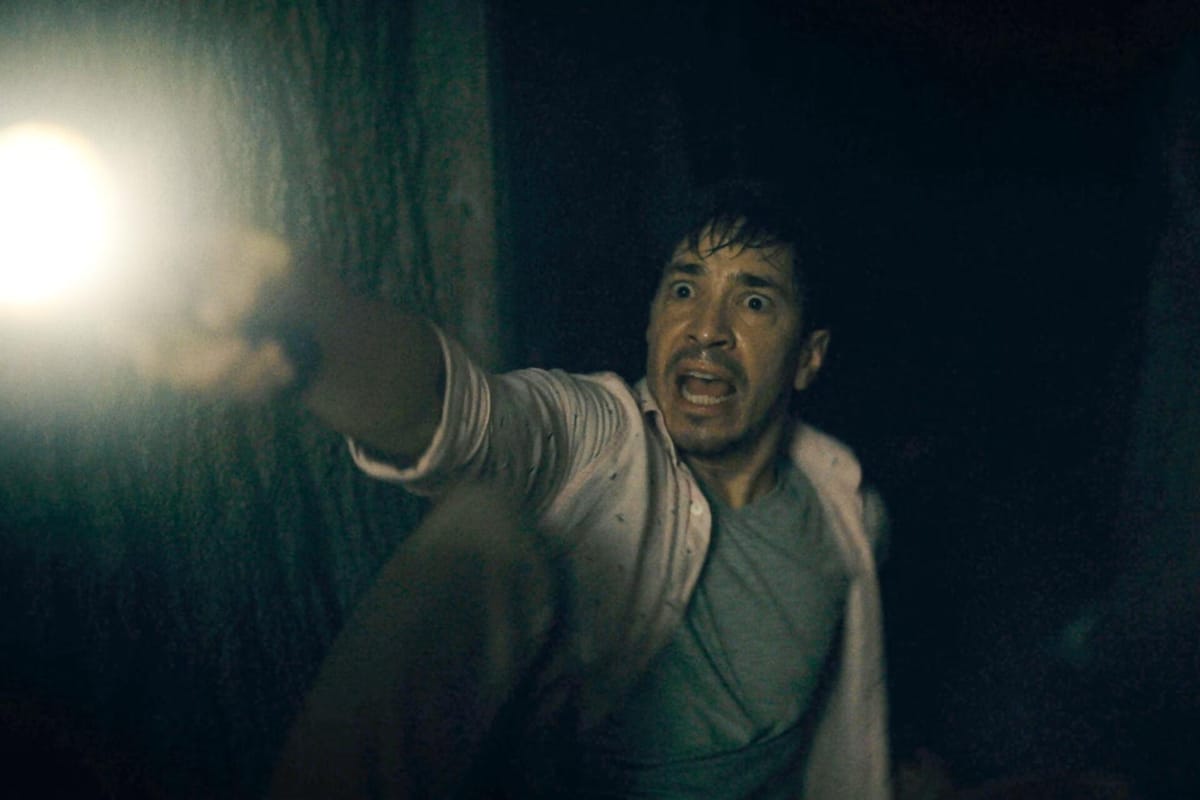
It’s in BARBARIAN. Near the end, the character AJ, played by Justin Long, has a moment where he realizes that he has hurt people. He shares this with the people around him, telling them he wants to be a better person and do better.
It’s a pretty standard realization moment. The first time I watched it, I thought to myself, “I don’t see how they’re going to redeem this guy.”
Later, the moment comes. AJ has the chance to be a better person and…
He throws the woman in front of the monster to save himself!
The audience wants to see this moment.
Stories are about emotion. We want to see this change happen. We need to see the connective tissue between the person they once were and this new person they become.
But two primary dangers lurk:
Insincerity. We need to believe. Like every structural device, if it feels like a structural device, we’ve failed. It becomes the kind of realization that BARBARIAN undermined and even mocked.
Resist the urge to indulge. A character walking around all night, being sad about things, gets boring fast. You can’t spend too much time there. Unless you’ve got Jeff Bridges and Sam Elliott at a bar. In that case, let ‘em cook.
Look at The Realization, not just as a singular character moment, but THE character decision that catapults the narrative into Act 3.
It is not accidental that I call Sequence 6, the sequence that holds the realization, The Drive To The Finish.
The Story and Plot Weekly Email is published every Tuesday morning. Don't miss another one.
 Tom Vaughan
When you're ready, these are ways I can help you:
WORK WITH ME 1:1
1-on-1 Coaching | Screenplay Consultation
TAKE A COURSE
Mastering Structure | Idea To Outline