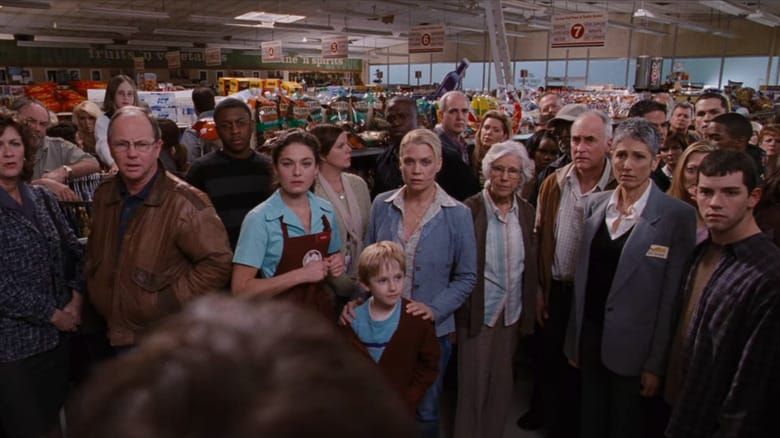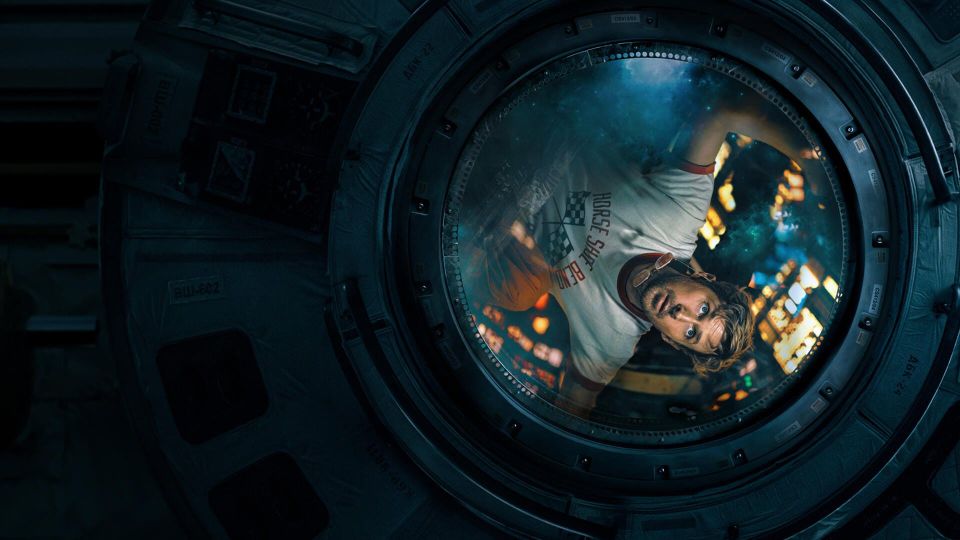
One image after another.
You are not writing literature. You are writing a movie. Something is always up on the screen.

The Story and Plot Weekly Email is published every Tuesday morning. Don't miss another one.
My goal for every screenplay:
To evoke the emotional and visual experience of watching the movie on screen.
When the reader has finished my screenplay, I want them to feel like they have seen the movie.
This gives me the best chance of getting to yes. Yes, to produce it. Yes, to direct it. To star in it. Finance it and distribute it.
I write a lot about emotion in our storytelling, and deservedly so. It is the primary thing that gives our stories value. It is essentially our product.
But I want to chat a little about the visual experience this week.
Specifically, the effort to keep a consistent visual flow in the reader’s mind.
I’m not worried about HOW or WHAT images to implant in this email. That is a different topic for another time.
This week, I just want to focus on always having an image in the reader’s mind.
It is our job to always control the visual flow of this visual story, and the first person that notices when we lose that control is the reader.
The reader WANTS to see the movie.
And a movie is one image after another after another. Twenty-four of them each second, to be exact. There is always something on the screen.
Even if the screen is black. That’s something.
This should also be true in the movie the reader sees in their mind.
You don’t want them reading so much as you want them SEEING.
And once you get them to start SEEING, you don’t want them to stop.
If it stops, something feels wrong. It’s disruptive. It kills the flow.
It’s like turning off the projector. The reader notices the change. What happened to their movie?
When a reader stops visualizing your movie, two things can happen.
(1) They get frustrated. Confused. And they blame you. They lose a little bit of trust in you.
Like any relationship, trust between the reader and the writer is a bank account. You’re making deposits, and you’re making withdrawals. Make enough withdrawals, and the reader loses faith in you.
That’s when things get bad. Once they stop giving you the benefit of the doubt, they’re less forgiving. They start judging. They skip action lines. Paragraphs. Now, they just want to get through it, and the burden is higher to win them back.
(2) They fill in the gap themselves and visualize something on their own.
This is not so bad in itself. It’s always going to be their version of things anyway.
The problem is when you write something that contradicts what they’re seeing. This is even more frustrating and more confusing, and they jump to #1 with even more intensity.
You must envision the movie first.
This is often the first hurdle and the primary habit you must form.
You can’t get a reader to envision a movie you haven’t envisioned yourself first.
A vague idea is not enough. Non-choices here weigh your writing down. Not enforcing a clear progression of images undermines the illusion.
You don’t have to see the whole movie all at once.
You just need to envision the scene you’re writing in this moment. Just focus on and localize this scene right now.
The more complicated the scene, the more you have to keep a careful eye on what the reader sees. A lot of movement means a lot of spatial relationships you must convey.
This can be a challenge in the editing room, let alone on the page. So don’t panic.
It’s part of your job and often part of the fun.
A few screenplays ago, I had a set piece with four different pairs of people in four different places in the same open courtyard of a shopping mall.
I had to make sure the reader never got visually lost, always knew the spatial relationships between characters, and understood the action in each moment.
It was a major challenge and a blast to write.
Principles to consider.
We can’t get into every possible variation in this email, but some key concepts will help you out as you get more and more comfortable.
Establish the first image.
This is crucial. Every time you enter a scene, establish a clear, simple image first. Stabilize the reader. Get them visually comfortable. Then build from there.
You can start big, like an establishing or master shot.
Central Park. Spring. People jogging.
And then get smaller to our focus, perhaps our character Alex on the bench. Whatever that focus may be.
Or you can start small, like birds flying away as a jogger rushes toward them.
Then the jogger passes the fence to our focus, Alex.
Often, you’ll want to just get to it.
You can simply write, “Alex sits on a bench.”
Whatever it is, you start with a clear and easily communicable image.
Maintain the visual order.
The order you give the reader information is the order an audience would perceive it on screen. If you confuse that order, you chip away at the illusion we’re watching a movie.
This means we usually avoid phrases like, “Before he does this, he does this.”
We would just say, “He does this. Then this.”
The audience perceives action first.
This means let the action finish before interrupting it. You will see something like this all the time:

We think we’re building an image, but we’re not. We actually have no idea what to see until the end of the second line.
We cannot perceive who Alex is until Alex storms into the room. Let him storm into the room first.

And THEN we get a better look at how we perceive him.
Avoid anything that contradicts the last image we just wrote.
Here is an example. It’s a minor misstep from a fine writer.

Again, this is a minor misstep, but it’s something I would fix if I caught myself doing it.
The first line establishes an image. An empty street. The reader pictures an empty street.
But then… a bounty of parked cars. But it’s too late. We actively pictured an empty street.
If we want to maintain the visual order and give information to the reader in the order they would perceive it, it’s probably better to go with something like this:

Each image ADDS to the previous image, rather than contradicting it.
Establish spatial relationships.
Make it clear how close characters are to each other. Are they on opposite sides of the room? Are they close? In the same bed? Does a desk sit between them?
If that changes, show that action. Characters moving closer or farther apart can absolutely affect the emotion of the scene.
This is especially important if an action contradicts what you’ve established.
For example, if we are imagining two characters seated ten feet apart and then they kiss, the reader gets disoriented fast.
Early on, we might get defensive and say, “Obviously, they moved closer. They couldn’t kiss otherwise.”
But the reader had an image in their mind. It’s not their job to go back in time and make sense of it. Their thought process is, “Wait. How did they kiss? They were ten feet apart?”
All they needed was “Chris stands. Moves to her. They kiss.”
Anything along those lines, and they’re experiencing the movie on the screen.
Don’t be afraid to re-establish those spatial relationships.
When cutting back to someone, don’t hesitate to remind us where they’re at.
“Still across the room, Dan watches.”
That “still across the room” immediately pulls us to that space and then the image of Dan.
Just a little effort to make the reader’s experience easier goes a long, long way.
A movie is a sequence of images.
So should your screenplay be.
You don’t have to control every detail of every image, and you shouldn’t try.
But you need an image. And you need to evoke that image in real time — the same amount of time it would take to absorb that information on screen.
You are your own first test audience.
Make sure you know what YOU are seeing through every scene. If you don’t see it, the reader won’t see it.
You have to make a choice of what you want on that imaginary screen first.
Don’t be discouraged early on.
As more people read your script, you are going to learn that people aren’t always seeing what you want them to.
That’s okay.
That’s what revisions are for. The whole point of revisions is to see your project from another perspective so you figure out what you missed the first time.
Fix it. Get better through repetition. The more you write, the better you will get at controlling the image in the reader’s mind.
Clarity of intent is easy to say, harder to do.
Being decisive and making choices is a habit. But it’s the single most differentiating factor between pros and non-pros.
Pros make definitive choices.
But the more you get into the habit of making choices, the better the choices you will make.
And the better you will get at executing those choices on the page.
The Story and Plot Weekly Email is published every Tuesday morning. Don't miss another one.
 Tom Vaughan
When you're ready, these are ways I can help you:
WORK WITH ME 1:1
1-on-1 Coaching | Screenplay Consultation
TAKE A COURSE
Mastering Structure | Idea To Outline